England's Bathing Sites Face Scrutiny Over Water Safety as Bacterial Contamination Persists
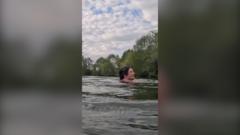
Water quality at England's designated bathing sites has deteriorated significantly, with recent testing revealing bacterial contamination that poses genuine health risks to swimmers, according to data released by the Environment Agency on May 15, 2026.
The agency's comprehensive analysis of 150 monitored bathing locations across England found that 34 sites—nearly one-quarter—failed to meet EU safety standards during the 2025 bathing season. E. coli and enterococcus bacteria, indicators of fecal contamination, exceeded acceptable thresholds at beaches from Cornwall to the North Sea coast.
"The contamination stems from combined sewer overflows during heavy rainfall," explained Dr. Sarah Chen, the Environment Agency's lead water quality scientist. "When storm water overwhelms treatment infrastructure, untreated sewage enters coastal and inland waters directly."
Swimmers exposed to contaminated water face elevated risks of gastroenteritis, respiratory infections, and skin conditions. The Health and Safety Executive documented 127 illness cases linked to bathing site exposure during summer 2025, though officials acknowledge actual figures may be substantially higher due to underreporting.
Local authorities have responded by issuing temporary bathing advisories at 18 sites, recommending that swimmers avoid contact with water until bacterial levels normalize. Some councils have invested in real-time water quality monitoring systems, though funding constraints limit widespread implementation.
Environmental campaigners argue that the standardization of safety protocols remains inadequate. "Current regulations permit episodic contamination events," noted James Whitmore of the Clean Water Alliance. "Were the standards more stringent, we would see accelerated infrastructure investment."
The Environment Agency has mandated that water companies submit remediation plans by June 2026. Proposed interventions include expanding treatment capacity and constructing storage tanks to capture overflow during peak rainfall periods.
Meanwhile, swimmers seeking safer alternatives increasingly turn to inland reservoirs and purpose-built lidos, where water quality remains consistently monitored and regulated.
Take a position. Out loud, if you can.
Four ways to start. Pick one and try saying it before you scroll on.
Tip · Record yourself, use in a notebook, or practice with a language partner.
According to the article, what is the primary cause of bacterial contamination at England's bathing sites?
Inversion after negative adverbials
When a negative adverbial (e.g., never, rarely, seldom) starts a clause, the auxiliary verb precedes the subject.
“"When storm water overwhelms treatment infrastructure, untreated sewage enters coastal and inland waters directly."”
What to know · C1 learners should recognise and use inversion for emphasis and formal style.
Try saying this aloud
Scenario: You are discussing weekend plans with friends and want to suggest a safer swimming spot.
- 01“How about we head to the reservoir instead of the beach?”
- 02“I've heard the water quality there is consistently monitored.”
- 03“That way we can avoid any health risks.”
Register tip · C1: neutral, slightly formal, suitable for group decision‑making
🎙️ Article Audio — Kokoro TTS
England's Bathing Sites Face Scrutiny Over Water Safety as Bacterial Contamination Persists
Adapted from BBC Environment · Read the original. LectoPress rewrites the facts as original graded-reader text for language learners.
Get stories at your level, every day
C1 · EN · delivered to your inbox · unsubscribe any time
Customize language, level & topics → full preferences

