MIT Clinches Top Honors in NASA's 2026 University Innovation Competition
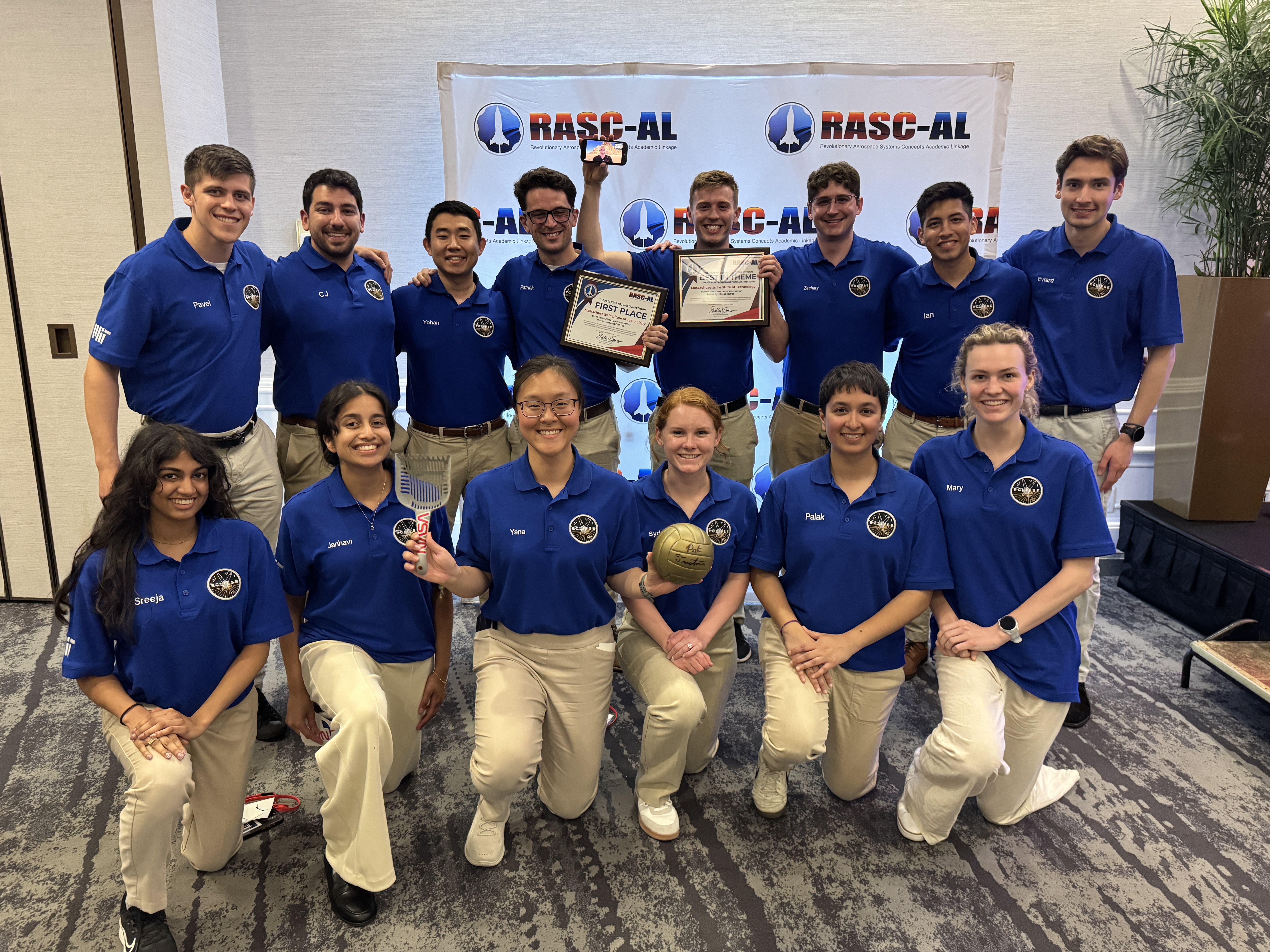
NASA has formally announced the winners of the 2026 RASC-AL competition, with the Massachusetts Institute of Technology securing first place. Their proposal, which focuses on in-situ lunar construction, was deemed by judges to be exceptionally creative yet entirely feasible. The competition, which is targeted at university-level participants, drew a substantial number of teams from across the United States. Although a diverse array of concepts was submitted, the MIT team's entry stood out because it addressed a critical aspect of sustainable lunar exploration. In recognition of their achievement, MIT has been awarded a financial prize designed to facilitate further development of their concept. Had other teams performed equally well, the competition might have been even closer, but MIT ultimately prevailed. The annual competition serves as a platform where students grapple with challenges analogous to those faced by professional aerospace engineers. NASA has long championed the integration of fresh academic perspectives into its mission planning. The MIT team, having dedicated months of rigorous effort to their project, presented their findings to a panel of NASA officials. Following a meticulous evaluation, the panel selected MIT as the champion. The team has expressed profound satisfaction and is cautiously optimistic about potential collaboration with the agency. NASA's leadership underscored the imperative of such innovative concepts for the progression of deep-space exploration. This competition has been instrumental in fostering a symbiotic relationship between academic institutions and the space agency. The winning concept, it has been suggested, could revolutionize the logistics of constructing habitats on the lunar surface. All participants were thanked for their contributions, which have enriched the dialogue surrounding space technology development.
Take a position. Out loud, if you can.
Four ways to start. Pick one and try saying it before you scroll on.
Tip · Record yourself, use in a notebook, or practice with a language partner.
Why did the MIT proposal stand out according to the article?
Third Conditional (inversion)
This structure expresses an unreal past condition and its imagined result, using inversion for formal register.
“NASA has formally announced the winners of the 2026 RASC-AL competition, with the Massachusetts Institute of Technology securing first place.”
What to know · C1
Try saying this aloud
Scenario: Writing a formal analysis of an academic competition for a research journal
- 01“Had the conditions been different, the outcome might have varied.”
- 02“The concept could revolutionize the field.”
- 03“It is imperative that we consider such innovations.”
Register tip · formal
🔑Key Phrases
C1 passive with hedging ('exceptionally', 'entirely') and formal verb 'deemed'.
The proposal was deemed by the committee to be exceptionally risky yet entirely legal.
Third conditional with 'had' inversion and 'might have been' for hypothetical past, a C1 marker.
Had the weather improved, the launch might have proceeded on schedule.
Present perfect with abstract evaluation ('instrumental', 'symbiotic') suitable for C1.
The program has been instrumental in fostering cooperation between nations.
C1 vocabulary ('underscored', 'imperative') and formal register.
The report underscored the imperative of sustainable resource management.
Hedging with 'it has been suggested' and modal 'could', a C1 academic convention.
It has been suggested that the new technology could revolutionize transportation.
🎙️ Article Audio — Kokoro TTS
MIT Clinches Top Honors in NASA's 2026 University Innovation Competition
Adapted from NASA · Read the original. LectoPress rewrites the facts as original graded-reader text for language learners.
Get stories at your level, every day
C1 · EN · delivered to your inbox · unsubscribe any time
Customize language, level & topics → full preferences