Regeneration Identified in Scottish Marine Protected Area Following Dredging Damage
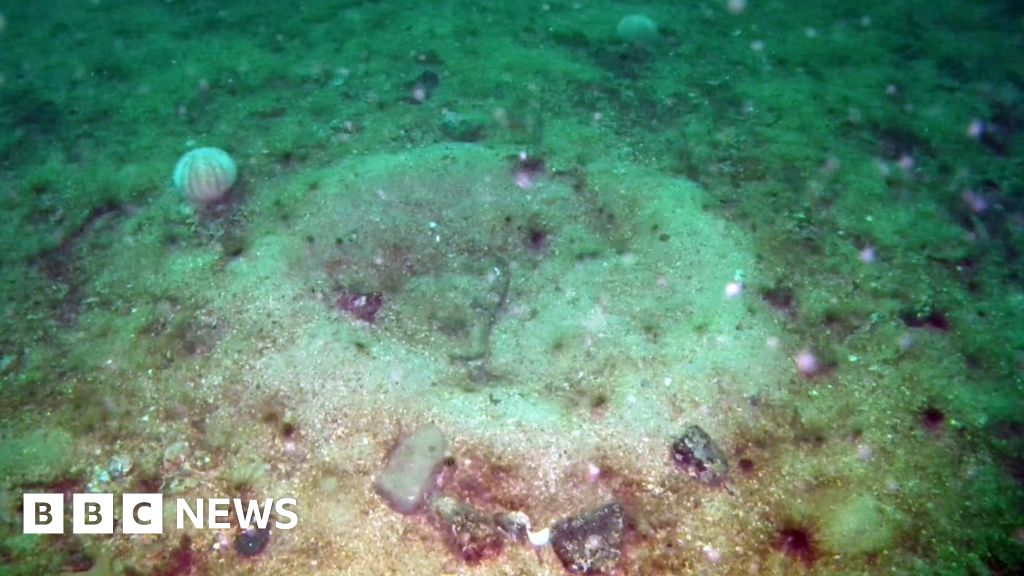
A marine protected area in Scotland is showing encouraging signs of recovery several years after illegal dredging devastated the seabed. Using a remotely operated underwater drone, researchers have documented the return of sea cucumbers, cat sharks, and crabs to the Wester Ross reserve. While complex ecosystems will take years to fully rebuild, undisturbed zones demonstrate the habitat's potential to nurture fish populations. Environmental groups are petitioning the Scottish parliament to restrict dredging in thirty percent of inshore waters, accusing the government of failing to enforce regulations effectively.
Although scientists acknowledge that a complete ecological recovery could take at least a decade, a Scottish marine reserve damaged by illegal fishing is showing encouraging signs of regeneration. In 2019, a dredger dragged heavy gear near Eilean Dubh within the Wester Ross Marine Protected Area, causing extensive damage to the sea floor. Covering approximately six hundred square kilometers of inland waters, this protected area was created in 2016 to safeguard a delicate seabed shaped by retreating glaciers. This unique habitat features flame shells and maerl seaweed, which in turn support sea cucumbers, urchins, and scallops. Dredging remains one of the most controversial commercial fishing practices, as dragging heavy metal gear destroys fragile benthic ecosystems in search of mud-dwelling shellfish. Subsequent underwater monitoring of the damaged zone, conducted via a remotely operated drone, has recently revealed the return of several species. Researchers have identified cushion sea stars, cat sharks, crabs, and resilient sea cucumbers that successfully escaped the gear by burying themselves. In undisturbed sections of the reserve, a complex three-dimensional ecosystem continues to thrive, serving as an important nursery for young fish. Phil Taylor, director of the Open Seas coalition, emphasized that recovering these areas is crucial for species like cod, which were historically abundant. Consequently, campaigners are preparing to demonstrate outside the Scottish parliament, urging ministers to implement fishing bans across at least thirty percent of inshore waters. Despite a watchdog report criticizing the government's marine management as ineffective, officials maintain that they take environmental protection seriously. Activists argue that delays are costing coastal jobs, as marine life continues to decline without immediate, legally binding restrictions.
Take a position. Out loud, if you can.
Four ways to start. Pick one and try saying it before you scroll on.
Tip · Record yourself, use in a notebook, or practice with a language partner.
What geological force originally shaped the seabed of the reserve?
Present participle clause for background information
Use a present participle clause ('Covering...') at the beginning of a sentence to provide background context or describe a state simultaneously.
“Covering approximately six hundred square kilometers of inland waters, this protected area was created in 2016 to safeguard a delicate seabed shaped by retreating glaciers.”
What to know · C1
Try saying this aloud
Scenario: Presenting a critique of a project's progress.
- 01“The current strategy is ineffective.”
- 02“This is a delicate situation.”
- 03“We must safeguard our resources.”
Register tip · formal
🔑Key Phrases
Used to express tentativeness and scientific caution regarding timelines.
Experts warn that complete ecological recovery could take several generations.
A sophisticated way to link current conservation goals with geological history.
The park was established to safeguard a delicate landscape shaped by retreating ice.
Describes healthy biological environments with structural complexity.
The complex three-dimensional ecosystem continues to thrive despite regional warming.
Expresses policy-level conservation demands with specific metrics.
The government decided to implement fishing bans across at least thirty percent of the bay.
Used to describe official oversight documents and their negative feedback.
We read a watchdog report criticizing the government's marine safety regulations.
🎙️ Article Audio — Kokoro TTS
Regeneration Identified in Scottish Marine Protected Area Following Dredging Damage
💬Discussion Questions
Open-ended questions to talk or write about — alone, with a partner, or in class.
- 1
Analyze how political lobbying by industrial fisheries shapes national marine conservation policies.
Evaluate - 2
Compare the efficacy of localized community-led conservation against top-down government mandates.
Compare - 3
To what extent is the restoration of damaged ecosystems a realistic goal for governments?
Evaluate - 4
How might global warming complicate the recovery of historically depleted cod populations?
Predict - 5
What are the ethical implications of prioritizing human employment over ecosystem survival?
Opinion - 6
How has your understanding of ecological interdependence evolved through reading scientific news?
Personal - 7
Contrast the environmental impact of bottom dredging with that of deep-sea mining.
Compare - 8
How can international bodies hold sovereign states accountable for non-compliance with marine treaties?
Evaluate
Adapted from BBC Science · Read the original. LectoPress rewrites the facts as original graded-reader text for language learners.
Get stories at your level, every day
C1 · EN · delivered to your inbox · unsubscribe any time
Customize language, level & topics → full preferences