Las noticias de la NASA

La NASA comparte noticias muy importantes sobre la Tierra y el espacio. La agencia celebra la reconstrucción de su estación en Guam. También, mil personas estudian el mar en un museo. Finalmente, un satélite toma fotos de un cráter nuevo en la Luna. Todo es muy interesante.
La NASA tiene noticias. Las noticias son importantes. La NASA estudia la Tierra. La NASA estudia el espacio. La NASA tiene fotos nuevas. La NASA tiene videos nuevos. Los videos son muy interesantes. Hay información sobre la Luna. Hay información sobre el sol.
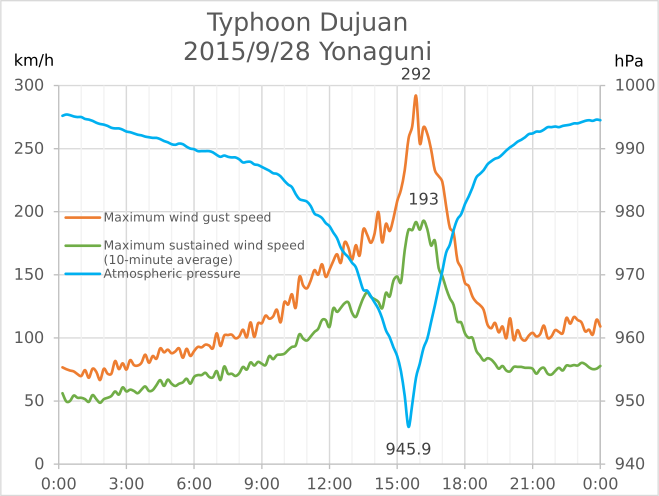
La NASA tiene una estación. La estación está en Guam. Un tifón causa daños graves. El tifón se llama Mawar. Ahora la estación está bien. La NASA celebra la restauración. La estación funciona otra vez. Los ingenieros trabajan con éxito.
Mil personas visitan un museo. Es el Día de los Océanos. Las personas estudian el mar. Las personas usan datos reales. La NASA comparte los datos. La ciencia es muy bonita. Los niños aprenden del mar. Los adultos también estudian hoy.
Hay un cráter nuevo. El cráter está en la Luna. Un satélite toma fotos hoy. El cráter es muy grande. Es un evento muy raro. Ocurre una vez por siglo. Los científicos estudian las fotos. La Luna tiene muchos secretos.
La NASA busca nuevos planetas. Hay un planeta muy joven. El planeta es un bebé. Es el planeta más joven. La NASA rompe un récord. Los telescopios miran el espacio. El espacio tiene cosas fantásticas. Los científicos tienen mucha alegría.
La NASA tiene programas educativos. Los estudiantes aprenden mucho aquí. Hay información para los niños. Hay información para los profesores. La ciencia ayuda al mundo. La tecnología es muy moderna. Muchas personas leen las noticias. La NASA publica artículos excelentes.
La Tierra tiene problemas graves. El clima cambia rápidamente hoy. La NASA observa el clima. Los satélites miran la Tierra. La información es para todos. Usted lee sobre el espacio. Usted aprende con la NASA.
Take a position. Out loud, if you can.
Four ways to start. Pick one and try saying it before you scroll on.
Tip · Record yourself, use in a notebook, or practice with a language partner.
Where is the NASA station that was restored?
Present tense of the verb 'tener'
The verb 'tener' (to have) is irregular in the present tense. It is used to express possession.
“La NASA tiene noticias.”
What to know · A1
Try saying this aloud
Scenario: You want to tell a friend that you have some interesting news to share.
- 01“Tengo noticias.”
- 02“Tengo fotos nuevas.”
- 03“Tengo información.”
Register tip · informal
🔑Key Phrases
A simple way to introduce that there is new information from the space agency.
Mi hermano tiene noticias hoy.
Uses the verb 'estar' to describe the location of a geographical feature.
El agua está en la mesa.
Useful phrase to say that something is operating or working once more.
El teléfono funciona otra vez.
Article Audio — Kokoro TTS
Las noticias de la NASA
💬Discussion Questions
Open-ended questions to talk or write about — alone, with a partner, or in class.
- 1
¿Te gusta leer noticias sobre el espacio?
Personal
News sourced from: NASA Science →. LectoPress rewrites the facts as original graded-reader text for language learners.
Get stories at your level, every day
A1 · ES · delivered to your inbox · unsubscribe any time
Customize language, level & topics → full preferences