Bipartisan JAWBONE Act Targets Government Coercion of Tech and Media
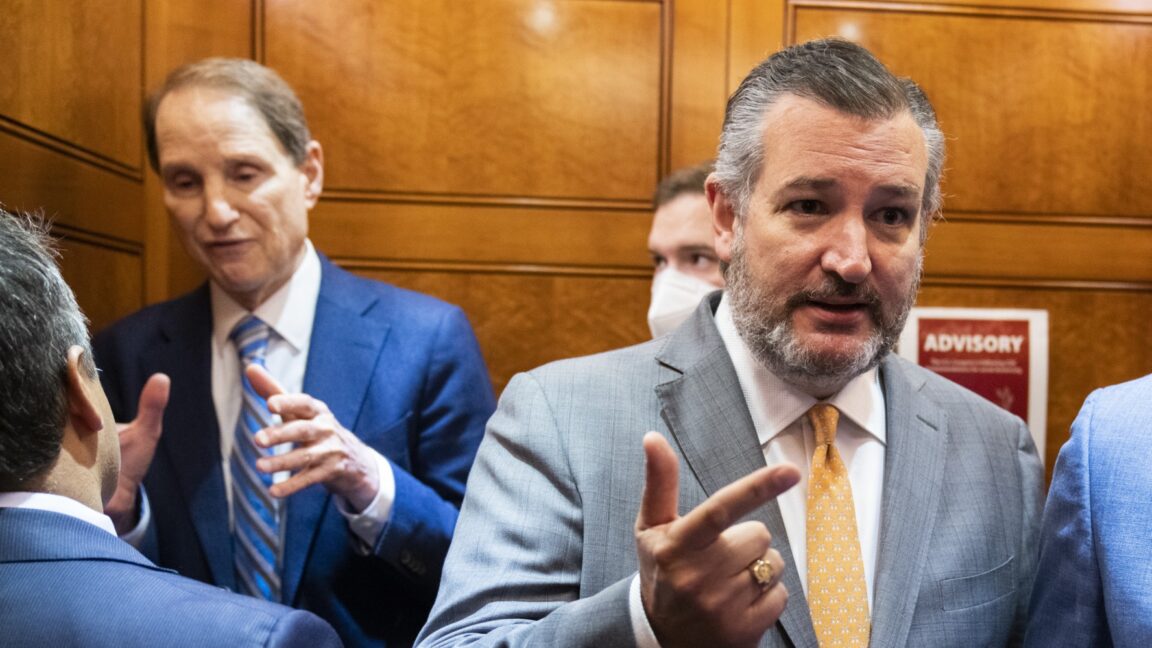
Senators Ted Cruz and Ron Wyden have introduced the JAWBONE Act to stop federal officials from pressuring private companies to censor speech. The bill allows victims to sue for financial damages and requires agencies to log their communications with tech firms in a public portal. By targeting both Republican and Democratic examples of coercion, the senators argue that this bipartisan measure is necessary to protect the First Amendment from being bypassed through private sector 'chokepoints.'
US Senators Ted Cruz (R-Texas) and Ron Wyden (D-Ore.) have introduced the JAWBONE Act, a bipartisan piece of legislation designed to prevent federal officials from coercing private companies into censoring protected speech. The bill, formally known as the Justice Against Weaponized Bureaucratic Overreach to Networked Expression Act, aims to protect the First Amendment rights of Americans by holding the government accountable for 'jawboning.' Jawboning occurs when the government pressures broadcasters, social media platforms, or AI services to restrict content.
The proposed law would create a private right of action, allowing individuals whose speech was stifled to sue government officials for compensatory damages. Currently, plaintiffs can typically only obtain injunctions to stop ongoing violations, but the JAWBONE Act would allow for financial recovery. State attorneys general would also be empowered to enforce the law through civil actions. By allowing financial damages, the bill ensures that officials can be held liable even after they have left office. However, the bill effectively imposes a limit by allowing compensatory damages but not punitive damages.
Cruz and Wyden highlighted examples from both the Biden and Trump administrations to show that jawboning is a non-partisan issue. Cruz cited the Biden administration’s pressure on Big Tech to 'cancel' Americans discussing vaccine mandates and election fraud. Meanwhile, Wyden pointed to threats made by Donald Trump against cable companies over their late-night programming.
A key feature of the bill is the requirement for a public portal where government agencies must submit their communications with broadcasters and tech firms. Detailed summaries would be made available to the public and Congress to ensure transparency. The bill also defines 'coerce' as taking or threatening hostile and unfavorable actions. While the ban is broad, it includes exceptions for lawful investigations and law enforcement activities. The senators argue that tech platforms and broadcasters serve as convenient 'chokepoints' for government censorship, making this protection essential.
Take a position. Out loud, if you can.
Four ways to start. Pick one and try saying it before you scroll on.
Tip · Record yourself, use in a notebook, or practice with a language partner.
What distinguishes the JAWBONE Act from current laws regarding censorship lawsuits?
Passive Voice
The passive voice is used when the focus is on the action rather than who is performing it.
“US Senators Ted Cruz (R-Texas) and Ron Wyden (D-Ore.”
What to know · B2
Try saying this aloud
Scenario: Describing a situation where a powerful person used their influence unfairly.
- 01“They were coerced into changing the report.”
- 02“We need more transparency here.”
- 03“The results were stifled by management.”
Register tip · informal
🔑Key Phrases
Describes the specific legal mechanism of the bill.
The new policy would create a better environment for workers.
Identifies who has the authority to act.
The committee will be empowered to make decisions.
🎙️ Article Audio — Kokoro TTS
Bipartisan JAWBONE Act Targets Government Coercion of Tech and Media
Adapted from Ars Technica · Read the original. LectoPress rewrites the facts as original graded-reader text for language learners.
Get stories at your level, every day
B2 · EN · delivered to your inbox · unsubscribe any time
Customize language, level & topics → full preferences