Bipartisan JAWBONE Act Targets State-Sponsored Pressure on Digital Expression
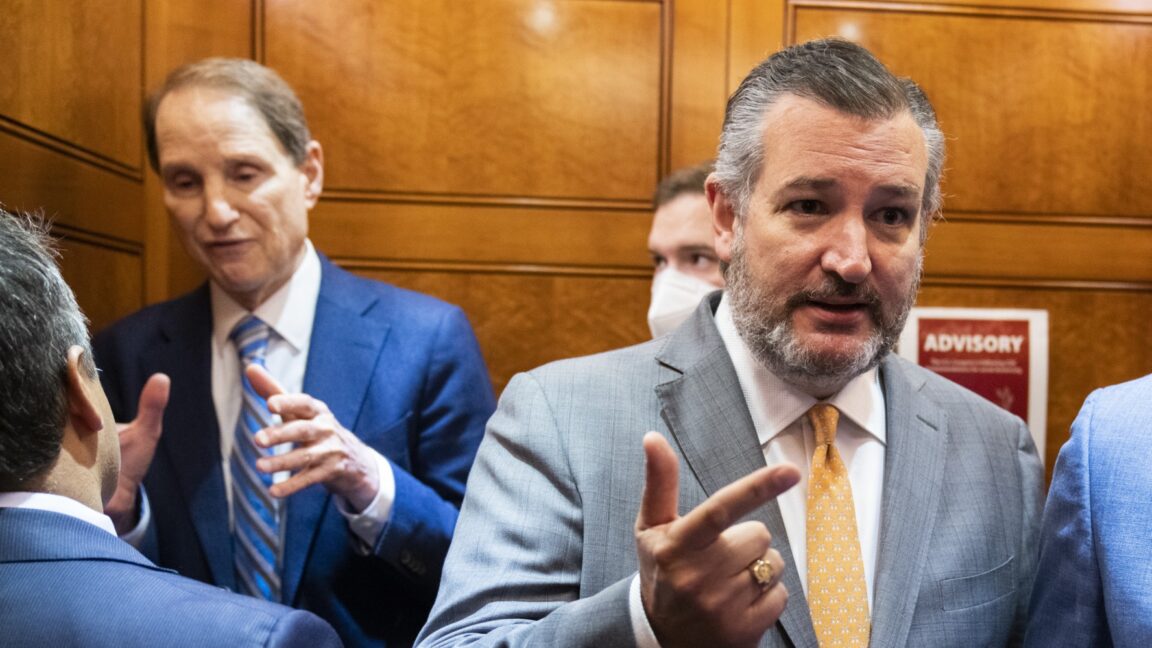
The JAWBONE Act, introduced by Senators Ted Cruz and Ron Wyden, represents a bipartisan strike against 'jawboning'—the practice of government officials coercing private companies to censor speech. The bill establishes a private right of action for compensatory damages, ensuring long-term accountability for federal employees. It also mandates a transparency portal for government-to-platform communications, aiming to prevent secret censorship and protect the First Amendment from being undermined through digital and broadcast chokepoints.
Senators Ted Cruz (R-Texas) and Ron Wyden (D-Ore.) have introduced the JAWBONE Act, a robust bipartisan legislative effort aimed at curtailing the phenomenon known as 'jawboning'—the informal but coercive pressure government officials exert on private platforms to suppress protected speech. Formally titled the Justice Against Weaponized Bureaucratic Overreach to Networked Expression Act, the bill seeks to establish a formidable legal framework to hold federal agencies and employees accountable for First Amendment violations.
At the heart of the legislation is the creation of a private right of action, enabling individuals whose expression has been stifled to pursue compensatory damages in court. This marks a significant departure from existing legal precedents, which often limit plaintiffs to seeking injunctions against ongoing or future violations. By authorizing financial damages, the bill ensures that government officials who engage in unlawful censorship can be held liable even after they have vacated their positions. Furthermore, state attorneys general would be authorized to initiate civil actions to enforce these provisions. The bill defines 'coerce' broadly, encompassing hostile actions, threats, or implied unfavorable treatment, though it maintains critical exceptions for lawful law enforcement investigations.
To bridge the gap in transparency, the JAWBONE Act mandates the creation of a public portal. Agencies would be required to submit records of their communications with social media entities, AI companies, and broadcasters, providing Congress and the public with a window into potential instances of covert pressure. Cruz highlighted the Biden administration's interactions with Big Tech regarding vaccine mandates as a primary concern, while Wyden cited Trump's historical threats against cable networks as evidence of the practice's non-partisan nature. The bill underscores that digital platforms and broadcasters function as convenient 'chokepoints' through which the government can circumvent constitutional constraints. By providing Americans with the tools to litigate against such overreach, the JAWBONE Act aims to fortify the independent editorial judgment of private speech-enabling systems.
Take a position. Out loud, if you can.
Four ways to start. Pick one and try saying it before you scroll on.
Tip · Record yourself, use in a notebook, or practice with a language partner.
Why does the JAWBONE Act authorize financial damages instead of just injunctions?
Participle Clauses
Participle clauses can be used to add information about a noun or a main clause in a more concise way.
“Senators Ted Cruz (R-Texas) and Ron Wyden (D-Ore.”
What to know · C1
Try saying this aloud
Scenario: Analyzing a complex organizational failure where influence was used behind the scenes.
- 01“It was a clear case of jawboning.”
- 02“They managed to circumvent the standard protocols.”
- 03“We need a more robust framework for accountability.”
Register tip · formal
🎙️ Article Audio — Kokoro TTS
Bipartisan JAWBONE Act Targets State-Sponsored Pressure on Digital Expression
Adapted from Ars Technica · Read the original. LectoPress rewrites the facts as original graded-reader text for language learners.
Get stories at your level, every day
C1 · EN · delivered to your inbox · unsubscribe any time
Customize language, level & topics → full preferences