NASA Releases Wave of New Scientific Discoveries

NASA has released several exciting updates about its scientific research. These include a new AI model for lunar science, satellite studies of hurricanes during El Niño, and discoveries about microbes surviving on the Moon. Additionally, the Hubble and Webb telescopes have found that distant space objects preserve clues about their past. NASA is also boosting open science through the Artemis Accords.
NASA has released several exciting updates about its recent scientific research and space missions. These stories cover everything from our home planet to the far edges of the solar system.
First, NASA has partnered with IBM to launch a new AI foundation model that will help researchers study the Moon. This technology will make it easier to analyze lunar data.
In Earth science, two satellites from the US and Europe have been studying hurricanes during El Niño. This research helps scientists understand how these powerful storms behave. Additionally, on World Ocean Day, about 1,000 museum visitors learned about NASA's sea level science.
Scientists have also discovered that human-related microbes might survive on the Moon's South Pole. This is a key finding for future astronauts who will visit the lunar surface. To prepare for future missions, NASA is boosting open science and data sharing through the Artemis Accords.
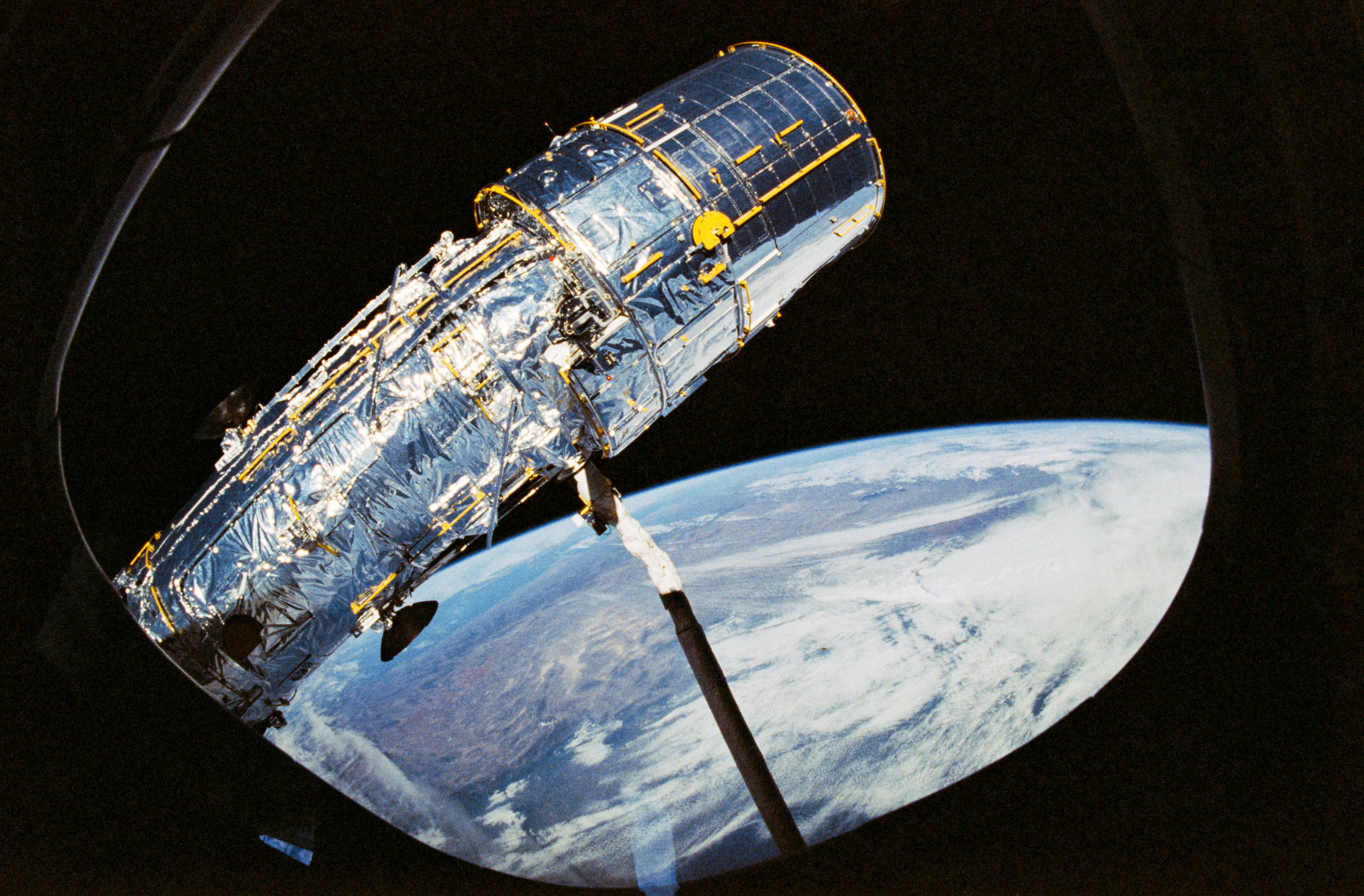
Looking deeper into space, the Hubble and Webb telescopes have found that far-out solar system objects "remember" their past. Meanwhile, the Chandra telescope has unveiled mysterious X-ray objects in deep space. Hubble has also tracked a new decagon, which is a ten-sided shape, encircling Saturn's South Pole.
In another interesting project, NASA pilots chased the Moon's shadow in their planes to carry out eclipse science.
If NASA continues to share this data, scientists around the world will make even more discoveries. The space agency hopes to inspire the next generation of researchers by making this information easy to access.
Take a position. Out loud, if you can.
Four ways to start. Pick one and try saying it before you scroll on.
Tip · Record yourself, use in a notebook, or practice with a language partner.
What is the purpose of the new AI model launched by NASA and IBM?
First Conditional
We use the first conditional to talk about a possible future situation and its likely result.
“If NASA continues to share this data, scientists around the world will make even more discoveries.”
What to know · B1
Try saying this aloud
Scenario: You are discussing the future of technology and space exploration with a classmate.
- 01“This technology will make it easier to analyze lunar data.”
- 02“This is a key finding for future astronauts”
- 03“If NASA continues to share this data, scientists around the world will make even more discoveries.”
Register tip · neutral
🔑Key Phrases
Refers to a versatile artificial intelligence system designed to assist in scientific analysis.
The team created an AI foundation model that will help predict weather changes.
Highlights the biological possibility of Earth-originating bacteria existing on the lunar surface.
Recent studies suggest that human-related microbes might survive inside spacecraft.
The act of promoting transparency and collaboration in the scientific community.
By boosting open science and data sharing, they enabled global researchers to collaborate.
Flying along the path of totality during an eclipse to collect scientific data from the air.
The research aircraft chased the Moon's shadow across the ocean.
Article Audio — Kokoro TTS
NASA Releases Wave of New Scientific Discoveries
💬Discussion Questions
Open-ended questions to talk or write about — alone, with a partner, or in class.
- 1
How do you think climate change might affect the frequency and strength of hurricanes?
Predict - 2
Why is it important for space agencies to share their data openly with the public and other countries?
Opinion - 3
What are the potential dangers of human microbes surviving on other celestial bodies like the Moon?
Evaluate - 4
If you had the chance to work at NASA, would you prefer to study Earth's oceans or deep space? Why?
Compare - 5
How can museums better engage young people in scientific learning?
Opinion - 6
Do you believe that artificial intelligence will eventually replace human space researchers?
Predict - 7
What is your reaction to the idea that far-out solar system objects can 'remember' their past?
Personal - 8
How does learning about space exploration change the way you view our own planet, Earth?
Personal
News sourced from: NASA Science →. LectoPress rewrites the facts as original graded-reader text for language learners.
Get stories at your level, every day
B1 · EN · delivered to your inbox · unsubscribe any time
Customize language, level & topics → full preferences