NASA Shares New Science Stories

NASA has many new science stories today. Scientists study the Moon with a new computer model. Two satellites study big storms on Earth. Telescopes look at far objects in space. NASA also shares its science data to help people around the world.
NASA has many new science stories today. Many scientists study space and Earth.
There is a new computer model. NASA and the company IBM make this model. It helps people study the Moon.
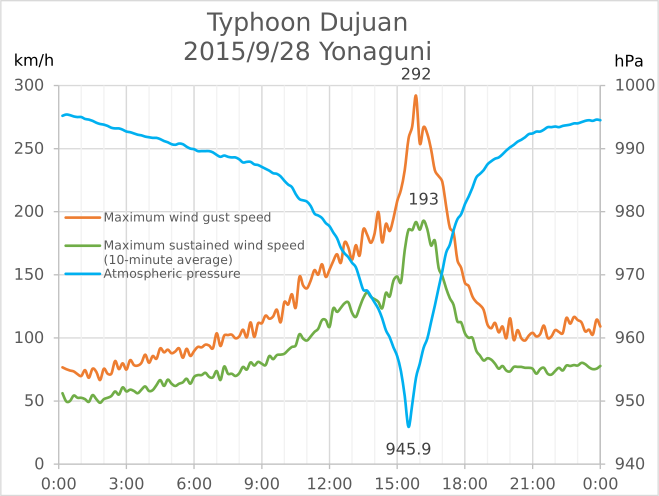
There are also two satellites in space. One satellite is from the United States. One satellite is from Europe. They look at big storms. They study hurricanes during El Niño.
Some scientists study the Moon's South Pole. They find a very interesting thing. Small living things from humans can live there. These are microbes. Microbes are very small.
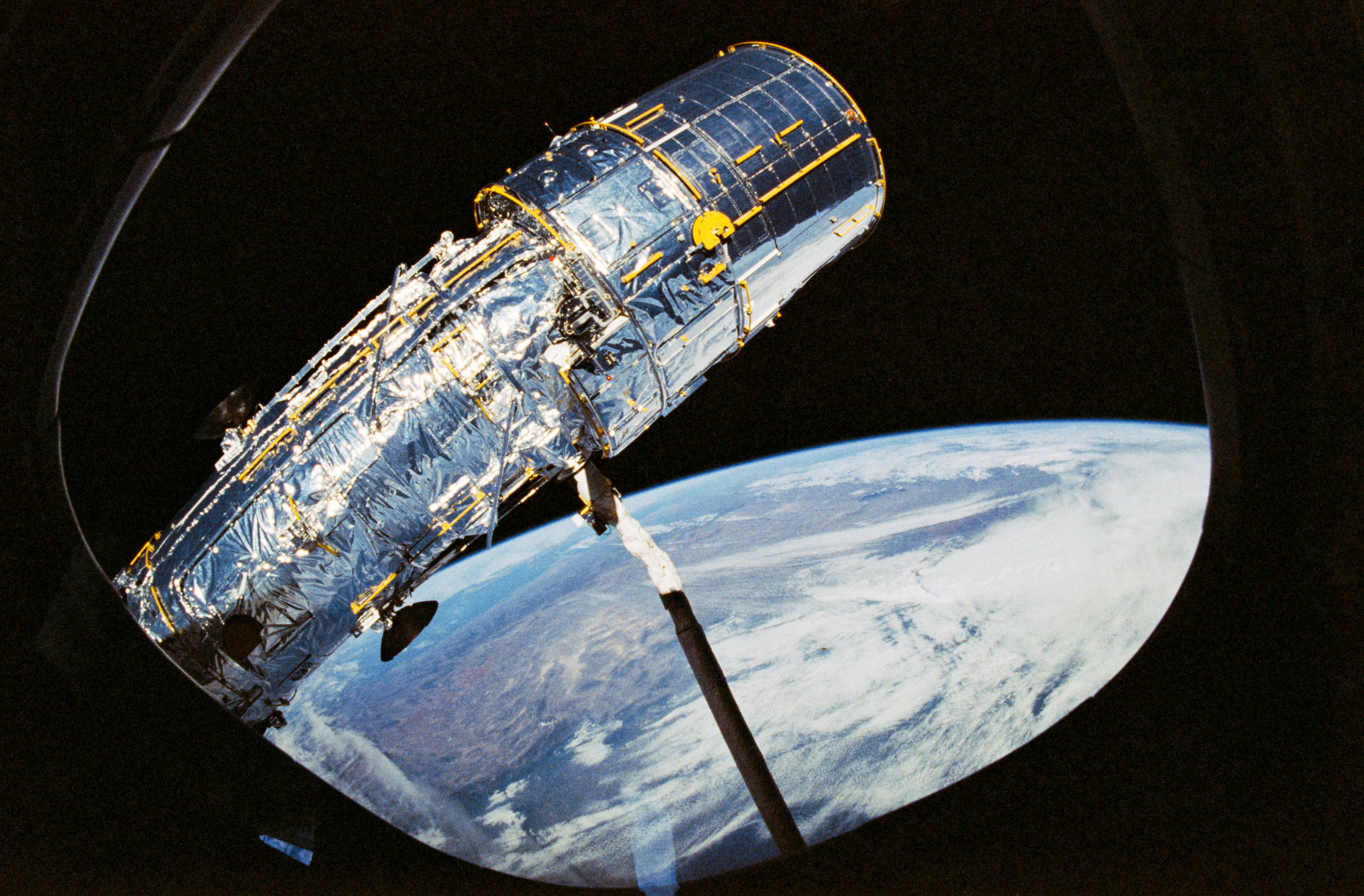
There are two big telescopes in space. Their names are Hubble and Webb. They look at very far objects in space. These far objects remember their past.
Another telescope is Chandra. Chandra sees mysterious X-ray objects in space.
There is a big planet. Its name is Saturn. The Hubble telescope looks at Saturn. There is a new shape on Saturn's South Pole. It is a decagon. A decagon has ten sides.
On World Ocean Day, people learn about the sea. One thousand people go to a museum. They see NASA sea level science.
NASA also shares its science. They share data with the Artemis Accords. This helps many people.
Some pilots fly planes for NASA. They chase the Moon's shadow. They do this for eclipse science.
Look at the sky. NASA is always working. They study the Earth and the stars every day. There is always a new story.
Take a position. Out loud, if you can.
Four ways to start. Pick one and try saying it before you scroll on.
Tip · Record yourself, use in a notebook, or practice with a language partner.
Who made the new computer model with NASA?
Present Simple with 'There is / There are'
We use 'there is' for singular nouns and 'there are' for plural nouns to state that something exists.
“There is a new computer model.”
What to know · A1
Try saying this aloud
Scenario: You are talking to a friend about a cool science exhibition in your city.
- 01“There is a new computer model.”
- 02“Look at the sky.”
- 03“There is always a new story.”
Register tip · informal
🔑Key Phrases
This phrase describes the scientific research on weather patterns using satellites.
Scientists use satellites to study hurricanes during El Niño.
Refers to pilots flying along the path of a solar eclipse to collect data.
The pilots fly fast to chase the Moon's shadow.
Article Audio — Kokoro TTS
NASA Shares New Science Stories
💬Discussion Questions
Open-ended questions to talk or write about — alone, with a partner, or in class.
- 1
Do you like to look at the stars and the Moon? Why or why not?
Personal - 2
Is it important to study big storms like hurricanes?
Opinion - 3
Would you like to visit a science museum to learn about the ocean?
Personal - 4
Do you think computers are helpful for studying space?
Opinion - 5
How do you feel when you see a big storm outside?
Personal - 6
Why do you think scientists want to share their science with other countries?
Opinion - 7
Which is more interesting to you: studying the deep ocean or studying far planets?
Compare - 8
Do you think humans will live on the Moon in the future?
Predict
News sourced from: NASA Science →. LectoPress rewrites the facts as original graded-reader text for language learners.
Get stories at your level, every day
A1 · EN · delivered to your inbox · unsubscribe any time
Customize language, level & topics → full preferences