A New Commercial Mission Will Help a NASA Spacecraft
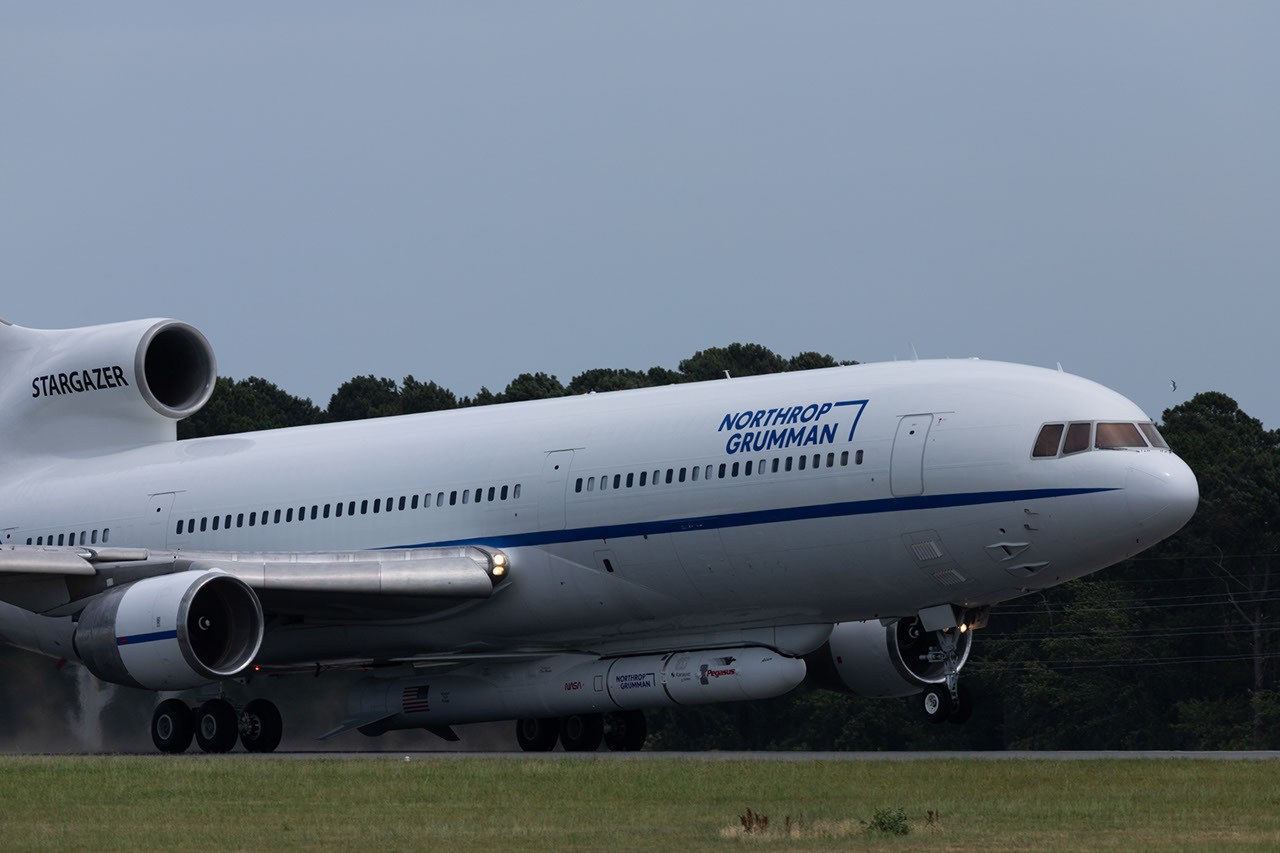
NASA and its partners are preparing to launch a new commercial flight in June to boost the Neil Gehrels Swift Observatory. This important satellite has studied powerful cosmic explosions, known as gamma-ray bursts, for many years. It also observes other events in space. If the boost mission succeeds, the spacecraft will stay in orbit to continue its scientific work. Scientists at the Goddard Space Flight Center hope to collect more data about stars and black holes after the launch.
NASA and its partners are ready to launch a new commercial space mission in June. This special flight will boost the Neil Gehrels Swift Observatory, which has been in space for many years. Astronomers use this satellite to study gamma-ray bursts, which are the most powerful explosions in the universe. However, the spacecraft also observes many other interesting events and objects in the deep sky. For example, the satellite can detect sudden changes in stars that are very far from Earth.
Scientists at the Goddard Space Flight Center watch these cosmic events to learn about astrophysics. If this commercial mission succeeds, the satellite will stay in its orbit and work longer. The team has planned this flight for a long time to keep the spacecraft safe. Many partners have worked together to prepare the equipment and the rocket for the launch. They want to make sure that the satellite can continue its important scientific work.
A NASA writer, Jeanette Kazmierczak, pointed out that this mission is important for space science. Another writer, Alise Fisher, also described how the satellite has helped researchers around the world. They have shared these details on June 29, 2026, to explain what to expect next. If we do not help the satellite now, we might lose a very valuable tool. Therefore, this boost mission is a necessary step to protect our space instruments.
The observatory will continue to look for sudden flashes of energy in the universe. This project shows how government agencies and private businesses can carry out big missions together. In addition, scientists hope to collect more data about stars and black holes after the boost. Everyone is waiting to see the rocket take off at the end of the month. We hope that this partnership will lead to more discoveries in the near future.
Take a position. Out loud, if you can.
Four ways to start. Pick one and try saying it before you scroll on.
Tip · Record yourself, use in a notebook, or practice with a language partner.
When is the new commercial space mission scheduled to launch?
First Conditional
We use the first conditional to talk about real possibilities in the present or future. It uses 'if' with a present simple verb, followed by 'will' or another modal verb.
“If this commercial mission succeeds, the satellite will stay in its orbit and work longer.”
What to know · B1
Try saying this aloud
Scenario: Discussing future plans or possibilities with a colleague at work.
- 01“If we finish this early, we can take a break.”
- 02“What do you expect to happen next?”
- 03“We need to make sure that everything is ready.”
Register tip · informal
🔑Key Phrases
This phrase is commonly used in both science and business to describe starting a major project.
The company is finally ready to launch its new product.
This is a common phrasal verb used in discussion or writing to introduce an important point.
He pointed out that the meeting was scheduled for three o'clock.
This phrasal verb is very common in professional and academic English when talking about doing work.
We need to carry out more research before we decide.
This is the standard phrasal verb used for planes and rockets when they start their flight.
The plane is going to take off in ten minutes.
Article Audio — Kokoro TTS
A New Commercial Mission Will Help a NASA Spacecraft
💬Discussion Questions
Open-ended questions to talk or write about — alone, with a partner, or in class.
- 1
How do you think space exploration affects our daily lives on Earth?
Opinion - 2
Would you like to travel to space if you had the opportunity?
Personal
Adapted from NASA Science · Read the original. LectoPress rewrites the facts as original graded-reader text for language learners.
Get stories at your level, every day
B1 · EN · delivered to your inbox · unsubscribe any time
Customize language, level & topics → full preferences