Commercial Boost Mission Set to Assist NASA's Swift Observatory
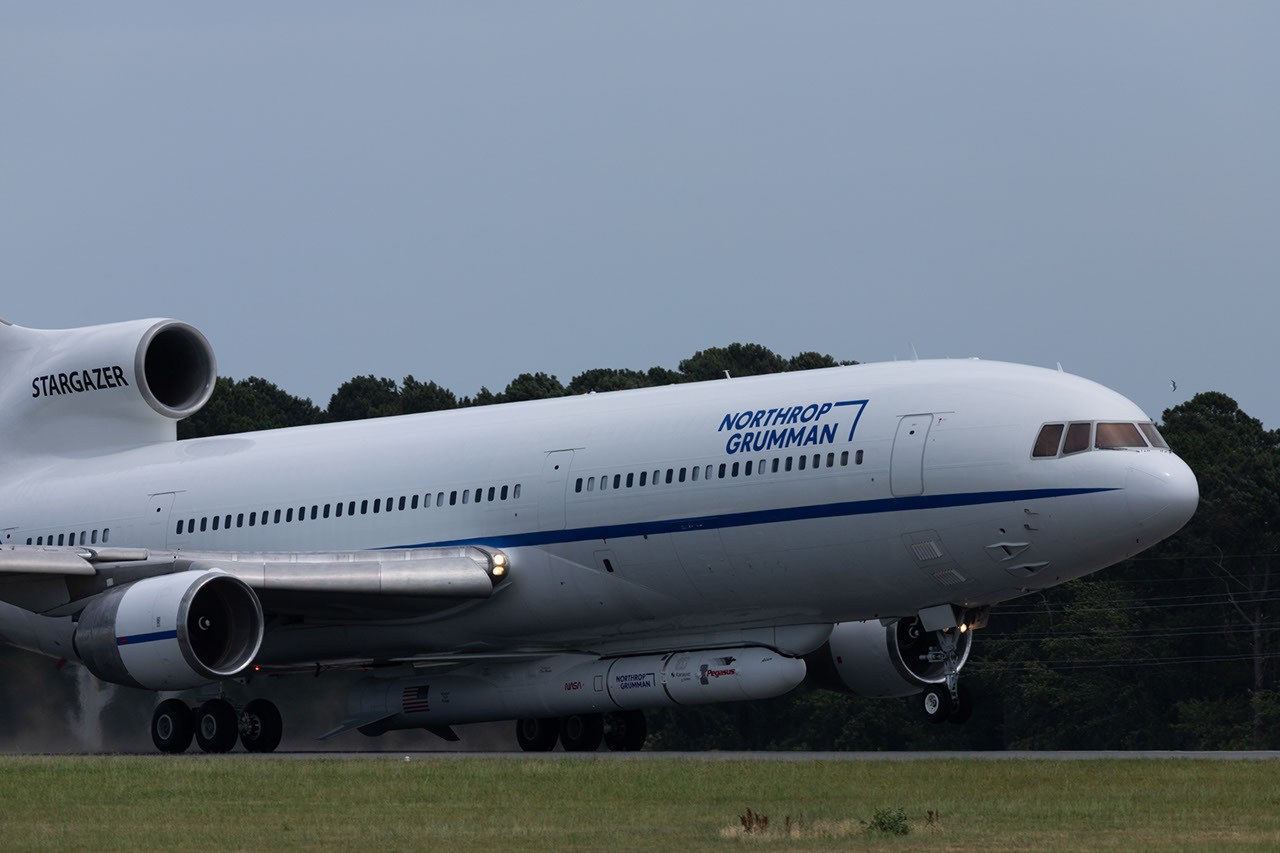
NASA's Neil Gehrels Swift Observatory, which primarily investigates gamma-ray bursts as well as other celestial objects and events, is the focus of a collaborative boost mission. As reported by Jeanette Kazmierczak and Alise Fisher on June twenty-nine, twenty-twenty-six, NASA and its partners are ready for this commercial flight, which is scheduled to launch in June. Associated with the Goddard Space Flight Center, the astrophysics project demonstrates a commercial partnership to support the satellite. This launch will help the observatory continue monitoring the most powerful explosions in the universe.
Associated with the Goddard Space Flight Center, NASA's Neil Gehrels Swift Observatory is a specialized satellite designed to investigate gamma-ray bursts, arguably the most powerful explosions in the universe. In addition to these extreme events, this advanced spacecraft studies various other cosmic objects and events, contributing significantly to our understanding of astrophysics. Writers Jeanette Kazmierczak and Alise Fisher reported on June 29, 2026, that NASA and its partners are ready for a June launch to boost this satellite.
Although some space missions encounter unexpected delays, the teams involved in this project appear to be fully prepared for the upcoming commercial flight. Faced with the need to support the observatory, NASA has partnered with commercial entities to execute this crucial boost mission. This cooperative venture, which is categorized under astrophysics, highlights how public-private efforts can potentially extend the lifetime of essential research equipment in space.
According to reports published by the science team, the Neil Gehrels Swift Observatory has continuously observed cosmic explosions since its initial deployment. If this commercial boost mission proceeds as scheduled, the satellite is likely to continue its observations of gamma-ray bursts and other celestial phenomena. While the spacecraft focuses on the most powerful explosions in the universe, the supporting partners remain committed to ensuring the success of this June launch.
By collaborating with commercial partners, NASA demonstrates a modern approach to space exploration, albeit one that relies heavily on careful coordination. The article, which was shared on June 29, 2026, details how these entities are prepared to launch the boost mission during the month of June. Notwithstanding the complexities of astrophysics research, the Goddard Space Flight Center continues to support projects that study powerful cosmic events and explosions.
Jeanette Kazmierczak and Alise Fisher, writing for the science division, confirmed that the partnership is ready to conduct this commercial mission. As the June launch approaches, the spacecraft's ongoing study of gamma-ray bursts and cosmic objects remains a top priority for the astrophysics community.
Take a position. Out loud, if you can.
Four ways to start. Pick one and try saying it before you scroll on.
Tip · Record yourself, use in a notebook, or practice with a language partner.
What is the primary scientific focus of the Neil Gehrels Swift Observatory?
Reduced Relative Clauses / Participle Clauses
Using a past participle or present participle at the beginning of a sentence to reduce a relative clause, allowing for a more concise and advanced structure.
“Writers Jeanette Kazmierczak and Alise Fisher reported on June 29, 2026, that NASA and its partners are ready for a June launch to boost this satellite.”
What to know · C1
Try saying this aloud
Scenario: Presenting a formal project review on technological partnerships.
- 01“Notwithstanding the complexities, the project continues to support this venture.”
- 02“The team is likely to continue its observations.”
- 03“It demonstrates a modern approach, albeit one that relies on coordination.”
Register tip · formal
🔑Key Phrases
The proper noun representing the astrophysical satellite.
They analyzed new data from the Neil Gehrels Swift Observatory.
Represents the scale and severity of gamma-ray bursts.
He wrote a thesis on the most powerful explosions in the universe.
The NASA facility where major astrophysics studies are run.
A delegation visited the Goddard Space Flight Center yesterday.
The private spacecraft project helping NASA.
Plans for the commercial boost mission are underway.
The global network of scientists studying astrophysics.
This discovery created excitement within the astrophysics community.
Article Audio — Kokoro TTS
Commercial Boost Mission Set to Assist NASA's Swift Observatory
💬Discussion Questions
Open-ended questions to talk or write about — alone, with a partner, or in class.
- 1
To what extent should international environmental laws be applied to orbital space?
Opinion - 2
How would you analyze the ecological footprint of space exploration relative to global aviation?
Compare - 3
What geopolitical and environmental shifts do you anticipate as space commercialization accelerates?
Predict - 4
How does the concept of a fragile universe influence your personal environmental ethics?
Personal - 5
How would you evaluate the ethical implications of neglecting orbital debris management?
Evaluate - 6
How might advancements in astrophysics indirectly contribute to terrestrial environmental preservation?
Opinion - 7
How does the harshness of the space environment compare to Earth's extreme ecosystems?
Compare - 8
What environmental milestones do you predict space agencies will achieve by mid-century?
Predict
Adapted from NASA Science · Read the original. LectoPress rewrites the facts as original graded-reader text for language learners.
Get stories at your level, every day
C1 · EN · delivered to your inbox · unsubscribe any time
Customize language, level & topics → full preferences