Private Partners Cooperate with NASA to Elevate Scientific Satellite
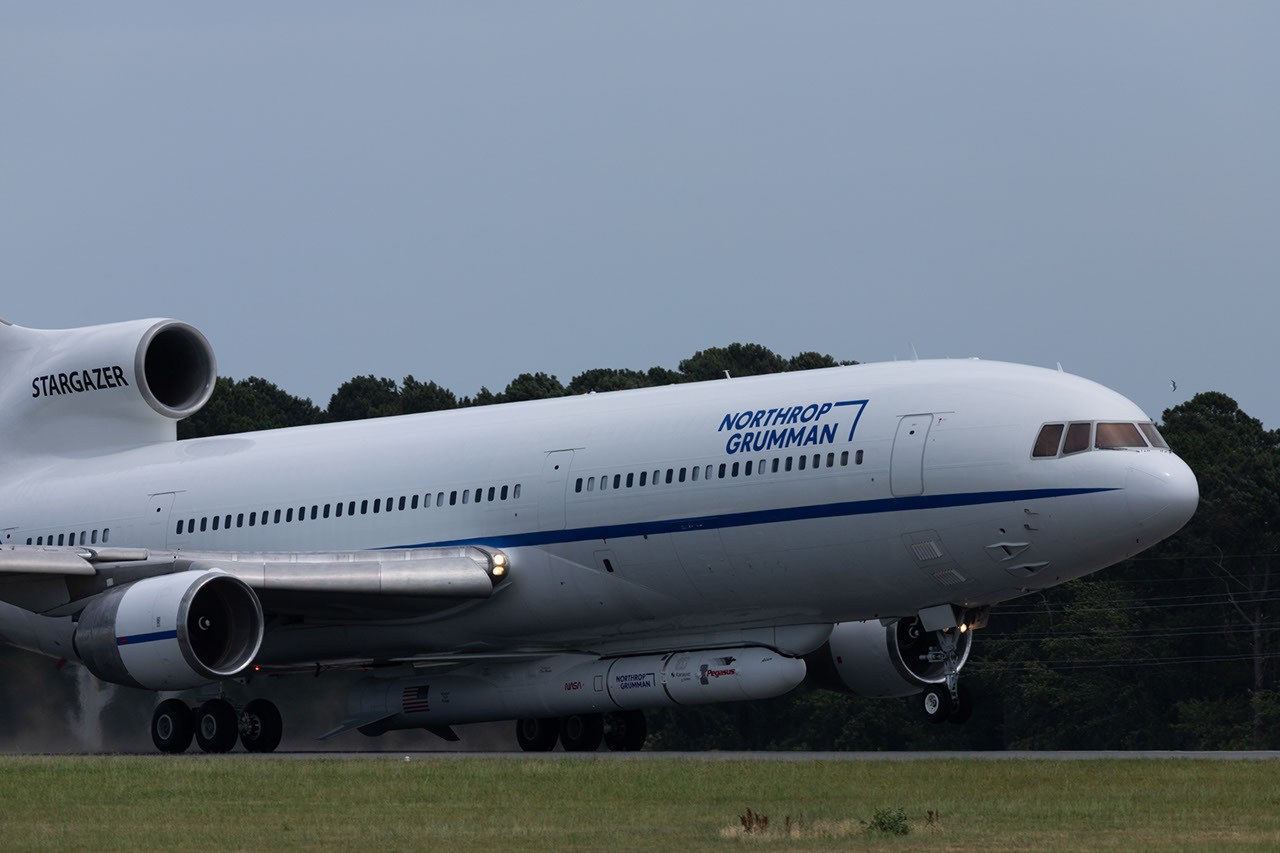
NASA and its commercial partners are preparing to launch a collaborative mission in June to boost the orbit of the Neil Gehrels Swift Observatory. This satellite is critical for studying gamma-ray bursts, which are the most energetic explosions in the cosmos. Because the spacecraft cannot raise its own altitude, it needs help from a private partner's vessel. This mission represents a major shift toward using private companies for space maintenance, allowing NASA to focus on analyzing data. Without this partnership, the satellite would risk falling back to Earth, ending its research.
NASA and its commercial partners are preparing for the June launch of a collaborative mission to lift an orbiting observatory. This joint project, which experts categorize under astrophysics, aims to assist a critical scientific spacecraft orbiting our planet. The target of this maneuver is the Neil Gehrels Swift Observatory, which monitors gamma-ray bursts, the most energetic detonations in the cosmos. Jeanette Kazmierczak and Alise Fisher reported that the upcoming launch would strengthen the agency's capacity to record these extreme cosmic events. The observatory, which is managed in connection with the Goddard Space Flight Center, plays a vital role in modern astronomy. By identifying sudden flashes of high-energy light and other strange space phenomena, the spacecraft provides researchers with essential data about distant galaxies. Nevertheless, because the telescope lacks its own engines to maintain its height, it requires assistance from an external vessel. If the agency had not approved this commercial partnership, the satellite might have descended too close to Earth. Consequently, the new mission will ensure that scientists can continue to study these massive stellar explosions without interruption. This commercial venture marks a significant shift in how the government maintains its scientific equipment operating in space. Although NASA traditionally managed its research missions, the agency is now utilizing private companies to perform orbital maintenance. This cooperative strategy allows the government to focus on data while private partners handle the logistics of flight maneuvers. The upcoming launch, which represents a major milestone in public-private space cooperation, demonstrates the growing viability of commercial space servicing.
Take a position. Out loud, if you can.
Four ways to start. Pick one and try saying it before you scroll on.
Tip · Record yourself, use in a notebook, or practice with a language partner.
What is the primary scientific goal of the Neil Gehrels Swift Observatory?
Third Conditional
The third conditional is used to describe a hypothetical situation in the past and its imaginary result. It is formed using 'if' + past perfect, followed by 'would/might/could' + have + past participle.
“If the agency had not approved this commercial partnership, the satellite might have descended too close to Earth.”
What to know · B2
Try saying this aloud
Scenario: You are discussing a joint project between your company and an external partner.
- 01“collaborative mission”
- 02“commercial partnership”
- 03“public-private space cooperation”
Register tip · informal
🔑Key Phrases
This phrase highlights that the space agency is working together with private companies on this project.
The two departments worked on a collaborative mission to improve efficiency.
This refers to the private businesses involved in the space project.
The organization is seeking commercial partners to help fund the next phase.
This term refers to the preservation and repair tasks performed on spacecraft while they are in orbit.
Regular orbital maintenance is required to ensure satellites do not stop functioning.
This refers to the instruments used on the satellite to study space.
The school purchased new scientific equipment for the physics laboratory.
This describes the collaborative relationship between government bodies like NASA and private industries.
Public-private space cooperation has accelerated the development of new technology.
Article Audio — Kokoro TTS
Private Partners Cooperate with NASA to Elevate Scientific Satellite
💬Discussion Questions
Open-ended questions to talk or write about — alone, with a partner, or in class.
- 1
Do you think private companies should be responsible for maintaining scientific satellites, or should governments handle it?
Opinion
Adapted from NASA Science · Read the original. LectoPress rewrites the facts as original graded-reader text for language learners.
Get stories at your level, every day
B2 · EN · delivered to your inbox · unsubscribe any time
Customize language, level & topics → full preferences