Scientists Uncover Mechanism Behind Alzheimer's Spread
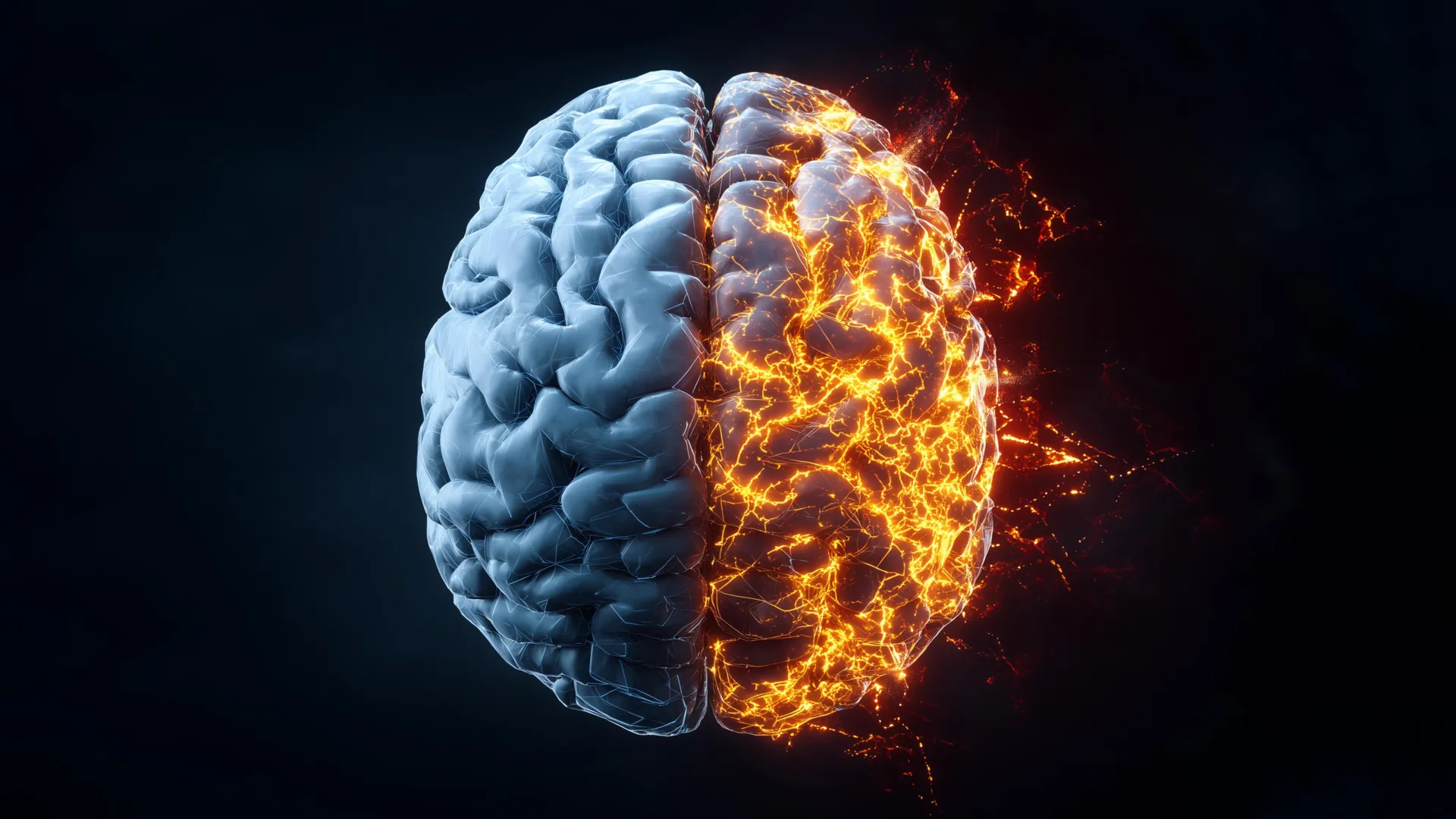
Alzheimer's disease progresses as a toxic protein called Tau spreads through the brain, forming sticky tangles that destroy neurons. Researchers from the University of Utah Health discovered that a normal brain protein, Arc, inadvertently helps Tau spread. Arc normally travels between cells inside tiny sacs called extracellular vesicles, which toxic Tau exploits to reach healthy neurons. While removing Arc in mice stopped Tau from spreading, it also accelerated the death of already diseased cells. Therefore, scientists suggest that instead of stopping Tau release, future therapies should focus on preventing these toxic vesicles from entering healthy cells.
Alzheimer's disease is characterized by the accumulation of a toxic protein called Tau, which destroys brain cells and leads to cognitive decline. In a healthy brain, Tau plays a standard structural role, but during the disease, it clumps into sticky tangles. Dr. Mitali Tyagi, a postdoctoral associate at Washington University, described these clusters as 'glue monsters' that disrupt internal cellular transport. Eventually, these tangles break down into smaller seeds, which travel to neighboring healthy neurons and corrupt their healthy proteins.
In a study published in the journal Cell, researchers at University of Utah Health investigated this spreading mechanism in mice. They discovered that Arc, a protein responsible for neuronal communication, is utilized by toxic Tau to travel between cells. Under normal conditions, Arc is packaged into tiny sacs called extracellular vesicles to carry signals to other neurons. However, experiments showed that toxic Tau attaches to Arc inside these vesicles, using them as vehicles to infect healthy cells.
By comparing mouse models, the team discovered that when the Arc protein was removed, the transmission of Tau was almost entirely stopped. Despite this finding, the researchers realized that Arc also plays a protective role in the early stages of the disease. When Arc is present, it helps sick cells expel excess Tau, allowing them to survive longer than they would without it. If Arc were completely blocked in patients, Tau would remain trapped inside neurons, causing them to die much faster.
Consequently, scientists believe that instead of preventing Tau release, future therapies should block these toxic vesicles from entering healthy neurons. The research team also detected similar vesicles containing both Arc and Tau in human brain samples, suggesting a similar process in humans. Senior author Jason Shepherd, a professor of neurobiology, noted that while these findings were promising, clinical treatments remained far in the future.
Take a position. Out loud, if you can.
Four ways to start. Pick one and try saying it before you scroll on.
Tip · Record yourself, use in a notebook, or practice with a language partner.
How does toxic Tau use extracellular vesicles to infect healthy cells?
Second Conditional
Used to describe hypothetical, imaginary, or highly unlikely situations in the present or future.
“If Arc were completely blocked in patients, Tau would remain trapped inside neurons, causing them to die much faster.”
What to know · B2
Try saying this aloud
Scenario: You are discussing the ethics of animal testing in a university class.
- 01“We should weigh the benefits.”
- 02“It was tested on animal models.”
- 03“Clinical trials are far off.”
Register tip · formal
🔑Key Phrases
The build-up of a substance that causes harm to surrounding cells.
The accumulation of a toxic protein eventually led to organ failure.
To interfere with the movement of signals and substances within a cell.
Sticky substances can disrupt internal cellular transport in neurons.
The biological process by which a disease travels through the bodies of mice.
Scientists analyzed the spreading mechanism in mice to understand the disease.
The movement of the Tau protein from one brain cell to another.
Blocking the transmission of Tau is a key goal of current research.
The state of medical treatments still being far from implementation.
Even after the discovery, clinical treatments remained years away.
Article Audio — Kokoro TTS
Scientists Uncover Mechanism Behind Alzheimer's Spread
💬Discussion Questions
Open-ended questions to talk or write about — alone, with a partner, or in class.
- 1
How should society balance the potential benefits of animal testing against ethical concerns?
Evaluate - 2
Why might scientists hesitate to promise immediate treatments based on successful mouse trials?
Opinion - 3
What role should private pharmaceutical companies play in funding research for rare diseases?
Evaluate - 4
How does the prospect of developing Alzheimer's shape people's financial and personal plans for retirement?
Personal - 5
In what ways do you think dynamic scientific collaborations accelerate medical breakthroughs?
Opinion - 6
How can we compare the challenges of finding a cure for Alzheimer's with finding a cancer cure?
Compare - 7
What do you predict will be the biggest challenge in translating this research to human patients?
Predict - 8
How can governments better prepare for an aging population with increasing cognitive health needs?
Evaluate
Adapted from ScienceDaily · Read the original. LectoPress rewrites the facts as original graded-reader text for language learners.
Get stories at your level, every day
B2 · EN · delivered to your inbox · unsubscribe any time
Customize language, level & topics → full preferences