Scientists Discover Route of Alzheimer's Transmission
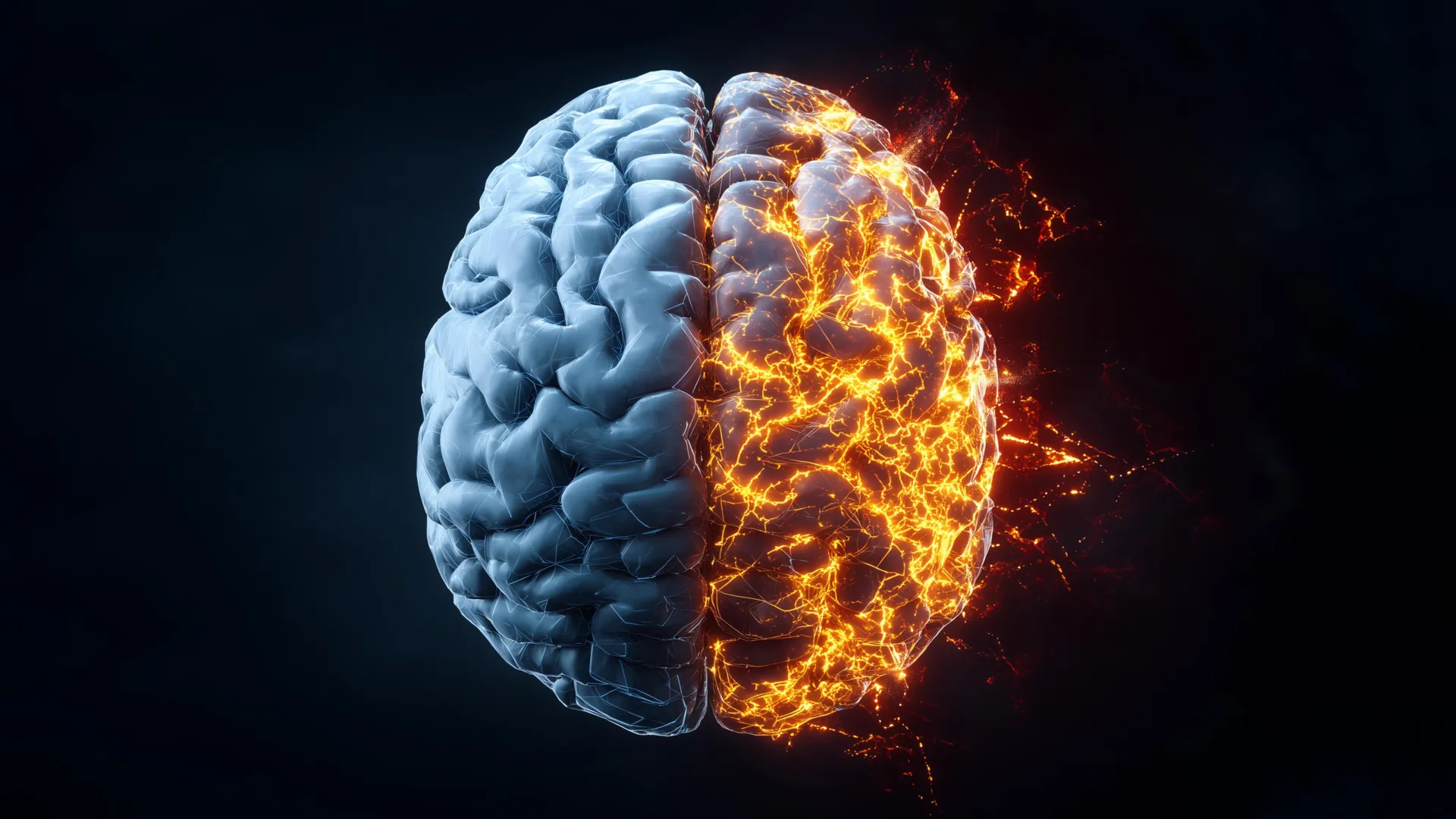
Alzheimer's disease progresses as a toxic protein named Tau spreads across the brain. Scientists have discovered that a normal brain protein called Arc helps Tau travel inside small vesicles. In experiments with mice, removing Arc successfully prevented Tau from spreading to neighboring cells. However, this also caused sick neurons to die much faster because Tau could not escape. Consequently, researchers believe that the best therapeutic strategy is to block these vesicles from entering healthy neurons rather than preventing their release.
Alzheimer's disease has long been a major challenge for scientists because it destroys brain cells. The main cause of this damage is a toxic protein called Tau. In healthy brains, this protein is harmless, but it becomes sticky in patients with Alzheimer's. Dr. Mitali Tyagi, a researcher at Washington University, has compared these sticky tangles to glue monsters. These monsters block the internal transport system of the cell, which eventually kills the neuron. When the toxic Tau spreads to other areas, patients suffer from worse memory loss.
Recently, researchers at University of Utah Health have discovered how this harmful protein travels. They focused on a normal brain protein called Arc, which helps neurons communicate with each other. Under normal conditions, Arc travels inside tiny membrane-bound sacs that are known as extracellular vesicles. However, the scientists found that toxic Tau can attach itself to Arc inside these vesicles. As a result, the vesicles carry the disease from sick cells into healthy ones.
To confirm this, the team studied mice that did not have the Arc protein. They observed that the transfer of Tau was almost gone when Arc was absent. However, they also pointed out that Arc performs a helpful role during the early stages. The protein helps sick neurons release excess Tau so that the cells can survive longer. If scientists block Arc, the toxic Tau might build up inside the cells and kill them.
For this reason, they believe that the best solution is to stop the vesicles from entering healthy cells. They have also found similar vesicles containing Arc and Tau in human brain tissue. Dr. Jason Shepherd, a neurobiology professor, has explained that they must conduct more research on humans. Although a treatment is still far away, this study might open new paths to slow down the disease.
Take a position. Out loud, if you can.
Four ways to start. Pick one and try saying it before you scroll on.
Tip · Record yourself, use in a notebook, or practice with a language partner.
What is the normal function of the brain protein called Arc?
First Conditional
Used to talk about possibilities in the present or in the future that are realistic.
“If scientists block Arc, the toxic Tau might build up inside the cells and kill them.”
What to know · B1
Try saying this aloud
Scenario: You are discussing a recent scientific article with a colleague.
- 01“Did you hear about the new study?”
- 02“They have made a major discovery.”
- 03“It could lead to a treatment.”
Register tip · informal
🔑Key Phrases
The mechanism inside a cell used to move molecules and materials.
Toxic proteins disrupt the cell's internal transport system.
Tiny containers in cells that are enclosed by a biological membrane.
Vesicles are small membrane-bound sacs within the cytoplasm.
The initial phases of a process or disease.
Detecting cancer in its early stages is crucial for survival.
To reduce the rate at which an illness gets worse.
Doctors hope this new drug will slow down the disease.
Article Audio — Kokoro TTS
Scientists Discover Route of Alzheimer's Transmission
💬Discussion Questions
Open-ended questions to talk or write about — alone, with a partner, or in class.
- 1
How does Alzheimer's disease affect a family's daily life compared to other illnesses?
Compare - 2
What ethical issues might arise when testing new medical therapies on humans?
Opinion - 3
How do you think medical research funding should be divided between different diseases?
Evaluate - 4
What steps can individuals take to maintain their cognitive health as they age?
Personal - 5
If a treatment is still far away, why is this mouse study so significant?
Evaluate - 6
How do you predict technology will assist doctors in treating brain disorders by 2050?
Predict - 7
In what ways does public awareness of a disease influence scientific progress?
Opinion - 8
Have you ever witnessed a family member or friend deal with memory loss?
Personal
Adapted from ScienceDaily · Read the original. LectoPress rewrites the facts as original graded-reader text for language learners.
Get stories at your level, every day
B1 · EN · delivered to your inbox · unsubscribe any time
Customize language, level & topics → full preferences