Forgotten Fossil Confirmed as First Antarctic Dinosaur
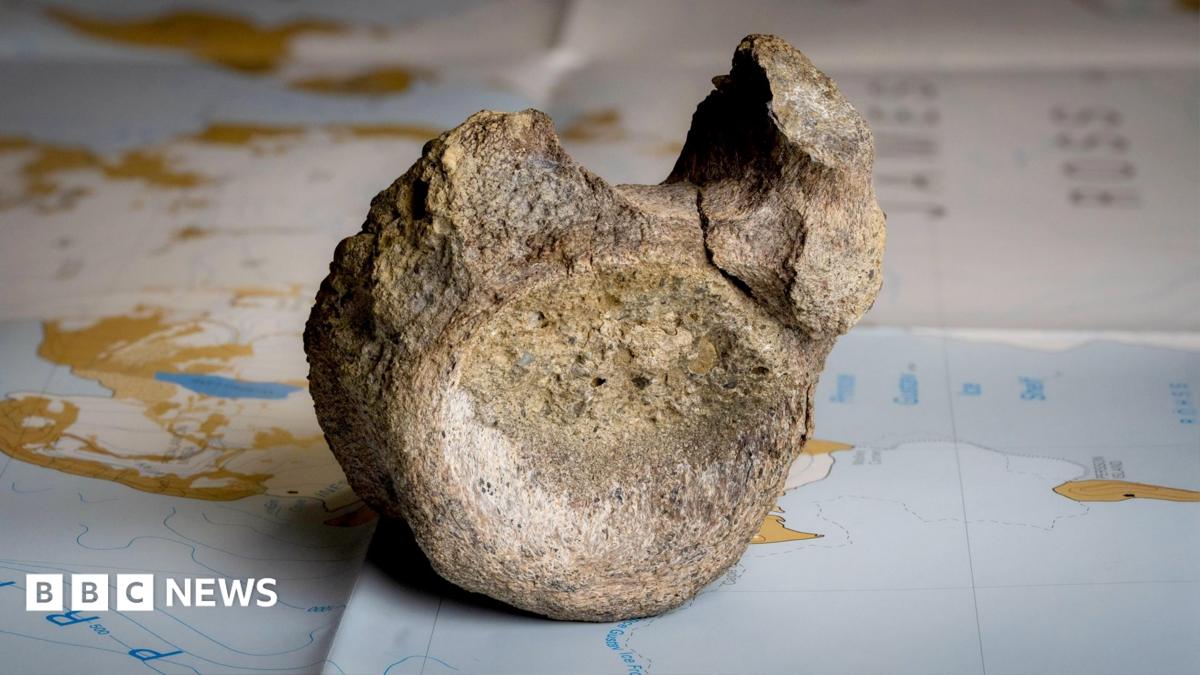
In nineteen eighty-five, geologists in Antarctica found a fossil but could not identify it. They sent the specimen to Cambridge, where it stayed forgotten in a drawer for forty years. Recently, Doctor Evans noticed its dinosaur-like shape. Professor Barrett confirmed it was a tail bone from a Titanosaur, making it the first dinosaur fossil ever discovered in Antarctica. This plant-eating creature lived eighty-two million years ago, when the continent was covered in green forests.
In 1985, a research team discovered an unusual fossil on James Ross Island in Antarctica. Because the team members could not identify the specimen, they kept it in a drawer. The bone remained inside a drawer at the British Antarctic Survey in Cambridge for forty years. During this long time, nobody studied the specimen, and people forgot about its existence.
Recently, Doctor Mark Evans spotted the fossil while he was examining thousands of old specimens. He noticed that the tail bone looked very dinosaur-like, so he decided to investigate it. He called Professor Paul Barrett from the Natural History Museum to inspect the fossil.
Barrett immediately confirmed that the bone belonged to a giant plant-eating dinosaur called a Titanosaur. The fossil has a very distinctive shape, with a hollow end and a rounded bump. This discovery is extremely important because it represents the first dinosaur fossil ever found in Antarctica.
Although Titanosaurs were the largest land animals in history, this specific individual was quite small. The scientists estimate that the dinosaur was only seven meters long, so it was probably young. This animal lived eighty-two million years ago during the Late Cretaceous Period.
Although Antarctica is now a frozen and uninhabitable place, it was very different in the past. Lush forests covered the continent at that time, and they provided food for these beasts. Today, scientists find it difficult to search for fossils because thick ice covers the rock. This discovery helps researchers understand how dinosaurs lived in these ancient ecosystems at the bottom of the world.
Take a position. Out loud, if you can.
Four ways to start. Pick one and try saying it before you scroll on.
Tip · Record yourself, use in a notebook, or practice with a language partner.
Who examined the fossil to confirm it belonged to a Titanosaur?
Contrast Clauses with Although
We use 'although' to connect two clauses that show contrast or surprising information within the same sentence.
“Although Antarctica is now a frozen and uninhabitable place, it was very different in the past.”
What to know · B1
Try saying this aloud
Scenario: You are explaining a surprising past event that went unnoticed.
- 01“discovered an unusual fossil on”
- 02“remained inside a drawer at the”
- 03“scientists find it difficult to search”
Register tip · formal
🔑Key Phrases
Indicates that an object stayed in a specific place for a long time.
The key remained inside a drawer at the office for months.
Expresses a past decision to start researching or checking something.
We decided to investigate it further after the meeting.
Highlights the historic first of a discovery.
This bone represents the first dinosaur fossil in the region.
Describes the current natural obstacle in Antarctica.
In winter, thick ice covers the rock near the river.
🎙️ Article Audio — Kokoro TTS
Forgotten Fossil Confirmed as First Antarctic Dinosaur
💬Discussion Questions
Open-ended questions to talk or write about — alone, with a partner, or in class.
- 1
In your opinion, why do some scientific discoveries remain unnoticed for decades?
Opinion - 2
How does discovering that Antarctica was once green change your view of the continent?
Opinion - 3
Compare the challenges of modern polar exploration with those of exploration in the past.
Compare - 4
What role should natural history museums play in educating the public about climate change?
Evaluate - 5
If you could go back in time, which prehistoric era would you choose to visit?
Personal - 6
How might future technology make searching for fossils under thick ice easier?
Predict - 7
Why do you think humans have such a strong fascination with extinct creatures like dinosaurs?
Opinion - 8
Evaluate the importance of local geology collections compared to famous national museums.
Evaluate - 9
What personal qualities do you think a successful researcher or paleontologist needs?
Personal
Adapted from BBC Science · Read the original. LectoPress rewrites the facts as original graded-reader text for language learners.
Get stories at your level, every day
B1 · EN · delivered to your inbox · unsubscribe any time
Customize language, level & topics → full preferences