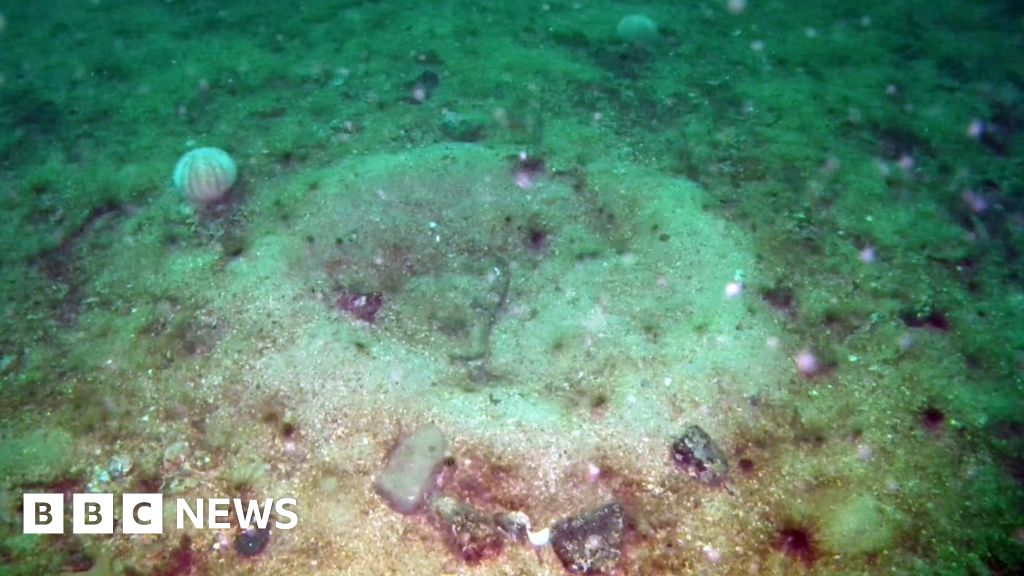
First Antarctica Dinosaur Bone in Cambridge
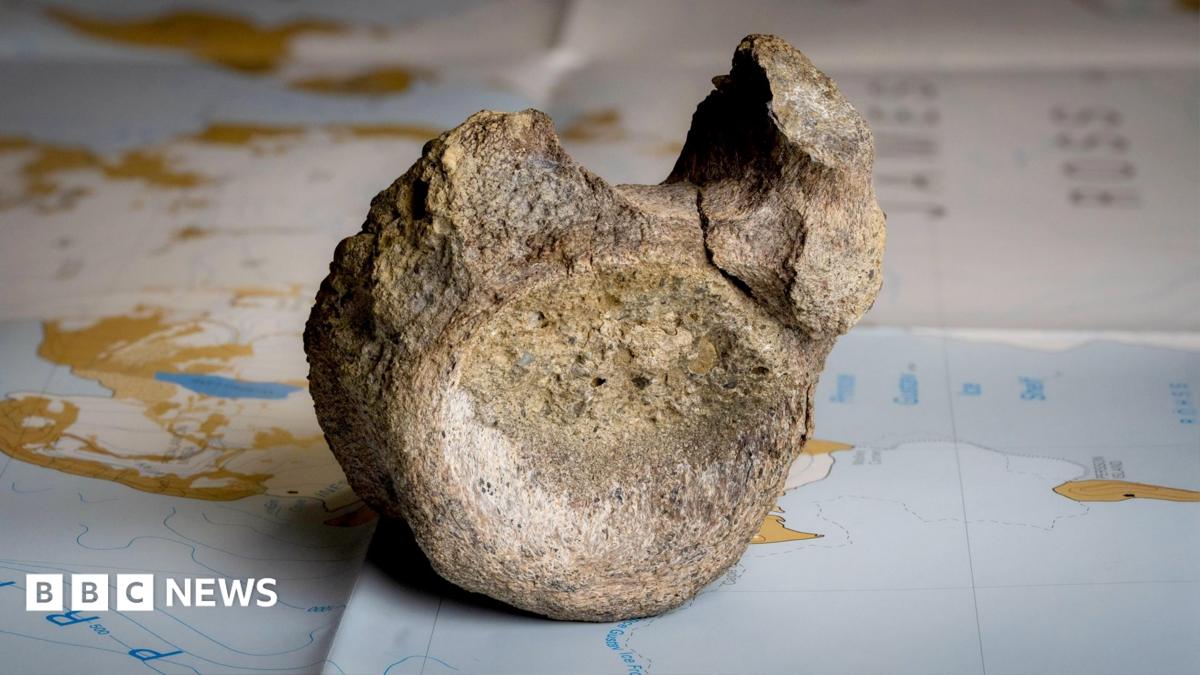
Scientists find the first dinosaur bone from Antarctica. It stays in a drawer in Cambridge for forty years. Recently, Doctor Evans finds it. It is a tail bone from a Titanosaur. This plant-eating dinosaur was seven meters long. Millions of years ago, Antarctica was warm and green with many trees.
There is a small bone in Cambridge. The bone is in a dark drawer. Scientists study the bone today.
The bone is from Antarctica. It is a very old bone. It is the first dinosaur bone.
We see a sketch of it. The sketch is from December 1985. The sketch is in a notebook.
Doctor Mike Thomson is a geologist. He writes about the bone. He calls it a large reptile.
The bone is ten centimeters wide. But the bone is from a dinosaur. It is a tail bone.
It belongs to a Titanosaur. This is a very large dinosaur. It has four strong legs.
It has a long neck. It has a long tail. It eats many green plants.
Some Titanosaurs are very big. They are thirty-five meters long.
But this dinosaur is small. It is seven meters long. It is a young dinosaur.
Geologists find bones on James Ross Island. This island is in Antarctica. A team finds this bone there.
They do not know the bone. They put it in Cambridge. It stays in a drawer.
The bone is there for decades. No person studies the bone. But now Doctor Evans sees it.
The bone looks very interesting. He shows it to Professor Barrett. Professor Barrett is a dinosaur expert.
The expert holds the fossil. He points to a hollow end. He points to a round bump.
This is a special bone joint. It is a ball and socket. Only Titanosaurs have this joint.
So this bone is a Titanosaur. The dinosaur lives in a green place. Antarctica is very different then.
There are many tall trees. There is food for the dinosaur. It is a peaceful plant eater.
Now the bone is in Cambridge. It is a very important fossil. It is the first dinosaur bone.
Scientists are happy with the discovery. Look at this amazing tail bone.
Take a position. Out loud, if you can.
Four ways to start. Pick one and try saying it before you scroll on.
Tip · Record yourself, use in a notebook, or practice with a language partner.
Where is the small bone stored?
Present Simple for Facts
We use the present simple tense to talk about facts that are always true, such as the climate of a place or the features of an animal.
“It belongs to a Titanosaur.”
What to know · A1
Try saying this aloud
Scenario: You are describing an object in a museum.
- 01“There is a small bone”
- 02“The bone looks very interesting”
- 03“Look at this amazing tail bone”
Register tip · informal
🔑Key Phrases
Used to point out the existence of a small object.
There is a small bone on the table.
Shows possession or category of the object.
It belongs to my friend.
Imperative form used to direct someone's attention to a bone.
Look at this amazing picture.
🎙️ Article Audio — Kokoro TTS
First Antarctica Dinosaur Bone in Cambridge
💬Discussion Questions
Open-ended questions to talk or write about — alone, with a partner, or in class.
- 1
How do you feel when you see very old things?
Personal - 2
Why do people like dinosaurs?
Opinion - 3
Do you want to visit cold places like Antarctica?
Personal - 4
Is it better to study rocks or live animals?
Compare - 5
Do you think there are many dinosaur bones under the ground?
Opinion - 6
Why do we keep old things in museums?
Evaluate - 7
How is a warm forest different from a cold desert?
Compare - 8
What is your favorite science topic to read about?
Personal - 9
Do you think scientists have an interesting job?
Evaluate
Adapted from BBC Science · Read the original. LectoPress rewrites the facts as original graded-reader text for language learners.
Get stories at your level, every day
A1 · EN · delivered to your inbox · unsubscribe any time
Customize language, level & topics → full preferences