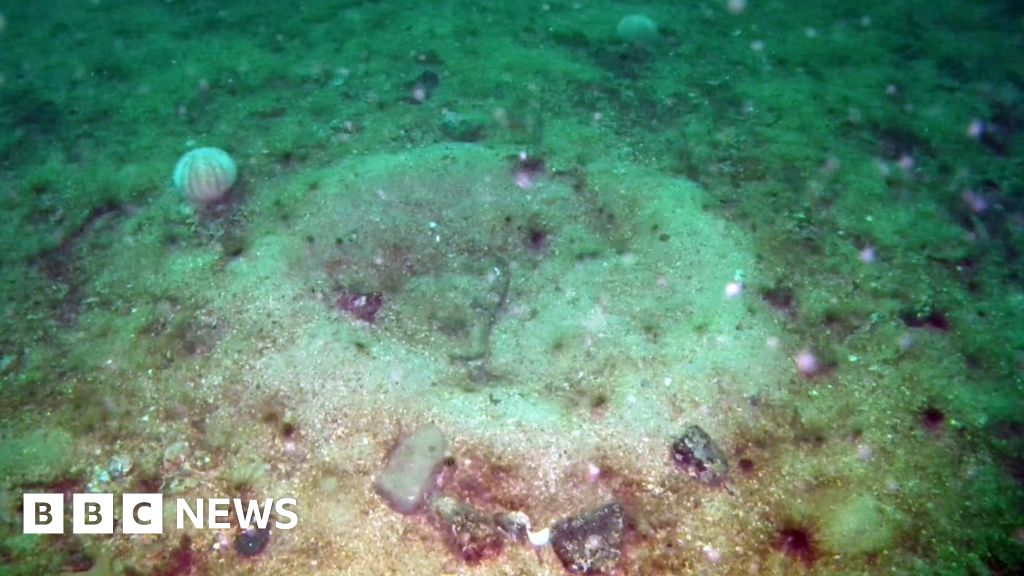
Forgotten Drawer Specimen Confirmed as First Dinosaur Bone from Antarctica
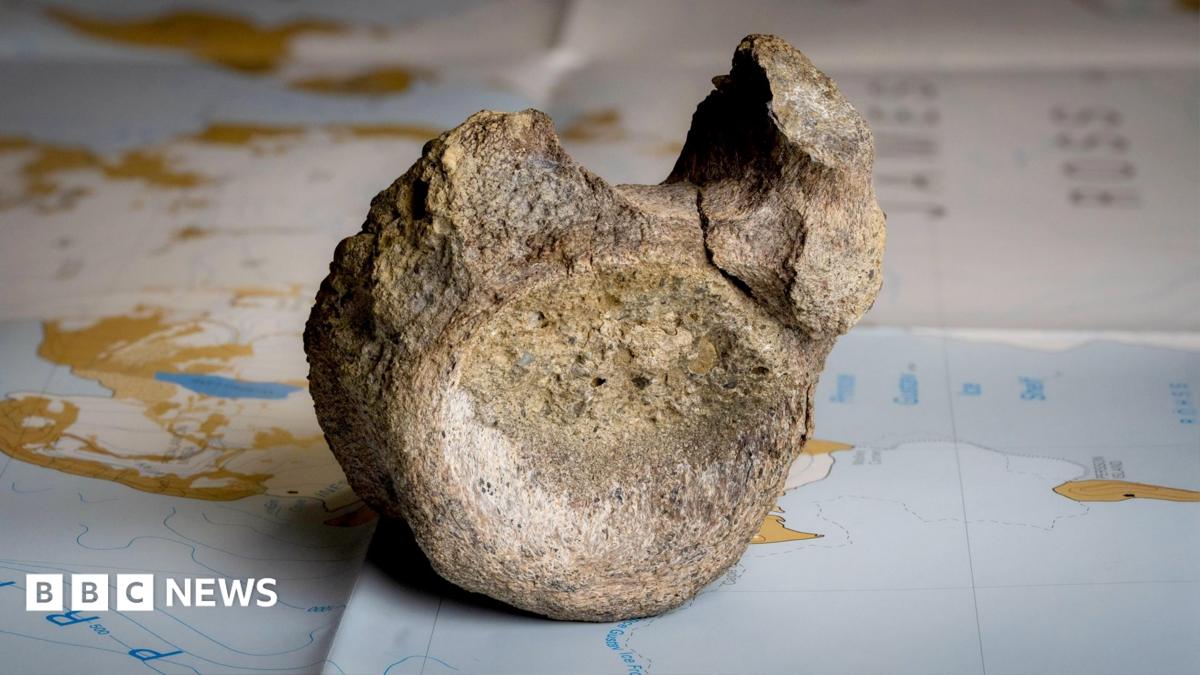
An unassuming fossil that spent forty years forgotten in a storage drawer has been identified as the first dinosaur bone ever discovered in Antarctica. Originally unearthed in nineteen eighty-five, the specimen was kept in Cambridge collections because the discovery team incorrectly assumed it was a marine reptile. Recently, collections manager Doctor Evans recognized its dinosaur-like features, and Professor Barrett confirmed it was a Titanosaur tail bone. This plant-eating creature inhabited Antarctica eighty-two million years ago, when the continent was covered in lush forests rather than ice, proving the region once supported a diverse ecosystem.
An unassuming fossil that languished forgotten in a storage drawer for forty years has recently been identified as the inaugural dinosaur bone discovered in Antarctica. Originally unearthed in 1985 on James Ross Island, the specimen was stored in the British Antarctic Survey collections because the discovery team could not verify its classification.
This historical oversight was resolved when collections manager Dr. Mark Evans noticed the fossil, identifying its distinctively dinosaur-like morphology among thousands of archived polar specimens. Geologist Dr. Mike Thomson had briefly sketched the ten-centimeter vertebra in his December 1985 field notebook, concluding then that the fossil belonged to a large marine reptile.
To determine the specimen's taxonomic placement, Evans consulted Professor Paul Barrett, who verified that the ball-and-socket structure was indeed a tail bone from a Titanosaur. Barrett explained that the tail bone's unique shape features a hollow on one end and a rounded bump on the other, creating a ball-and-socket joint.
This group represents the largest terrestrial herbivores to have existed, although this Antarctic specimen was a comparatively modest seven meters in length, suggesting a juvenile or small adult. While the largest species in this group weighed about sixty tonnes, this individual was likely a juvenile or a genuinely small adult bucking the trend.
This prehistoric herbivore occupied the region approximately eighty-two million years ago, during the Late Cretaceous Period, when the continent was covered by lush, temperate forests. While the thick ice cover makes modern polar palaeontology exceptionally challenging, this specimen provides crucial evidence about the biodiversity of ancient ecosystems at the bottom of the world. Ultimately, the long-forgotten fossil now occupies a prominent place in polar exploration history, proving that this inhospitable region once supported an active and diverse ecosystem.
Take a position. Out loud, if you can.
Four ways to start. Pick one and try saying it before you scroll on.
Tip · Record yourself, use in a notebook, or practice with a language partner.
What classification error did the original 1985 discovery team make?
Participle Clauses for Adverbial Functions
We use present participle clauses to express reasons or simultaneous actions, helping to create sophisticated and concise sentence structures.
“This historical oversight was resolved when collections manager Dr. Mark Evans noticed the fossil, identifying its distinctively dinosaur-like morphology among thousands of archived polar specimens.”
What to know · C1
Try saying this aloud
Scenario: You are presenting academic findings on historical geology.
- 01“inaugural dinosaur bone discovered in”
- 02“identifying its distinctively dinosaur-like morphology”
- 03“provides crucial evidence about the biodiversity”
Register tip · academic
🔑Key Phrases
Emphasizes the long-term neglect of the specimen in storage.
The manuscript languished forgotten in a storage drawer for decades.
Describes the analytical action of identifying structures.
He spent hours at the desk, identifying its distinctively dinosaur-like morphology.
Refers to a historical conclusion drawn at the time of discovery.
He published the report, concluding then that the fossil belonged to a new group.
Reports a formal verification of an anatomical detail.
The expert verified that the ball-and-socket structure was indeed authentic.
Concedes a major geographic hurdle using a subordinate clause.
While the thick ice cover makes modern polar palaeontology exceptionally challenging, new tools are helping.
🎙️ Article Audio — Kokoro TTS
Forgotten Drawer Specimen Confirmed as First Dinosaur Bone from Antarctica
💬Discussion Questions
Open-ended questions to talk or write about — alone, with a partner, or in class.
- 1
How do historical classification errors highlight the evolution of scientific methodologies over time?
Evaluate - 2
In what ways does this discovery challenge the public perception of Antarctica as a historically sterile wasteland?
Opinion - 3
To what degree should palaeontological research prioritize reconstructing ancient climates over identifying new species?
Evaluate - 4
How might the discovery of a juvenile Titanosaur tail bone complicate our understanding of dinosaur gigantism?
Compare - 5
What are the geopolitical and scientific implications of conducting high-stakes research in disputed territories like Antarctica?
Evaluate - 6
If you could collaborate with any research institution on a polar expedition, what specific hypotheses would you test?
Personal - 7
How do you foresee the field of palaeontology adapting to rapid advancements in non-invasive imaging technologies?
Predict - 8
Contrast the intellectual satisfaction of field discovery with the meticulous detective work of archive curation?
Compare - 9
To what extent does our fascination with prehistoric extinction events reflect our anxieties about our own species' future?
Opinion
Adapted from BBC Science · Read the original. LectoPress rewrites the facts as original graded-reader text for language learners.
Get stories at your level, every day
C1 · EN · delivered to your inbox · unsubscribe any time
Customize language, level & topics → full preferences