NASA Embarks on Unprecedented Robotic Salvage Mission to Rescue Orbiting Swift Telescope

NASA has launched an ambitious robotic mission to save the Swift space telescope from burning up in Earth's atmosphere. The telescope, which has studied gamma-ray bursts since 2004, has lost altitude due to solar-induced atmospheric expansion. Developed by U.S. startup Katalyst, the rescue robot will attempt to dock with Swift using three mechanical arms and tow it three hundred kilometers higher. Despite a predicted fifty-fifty chance of success, the thirty-million-dollar mission could establish a new commercial model for servicing and upgrading satellites in orbit.
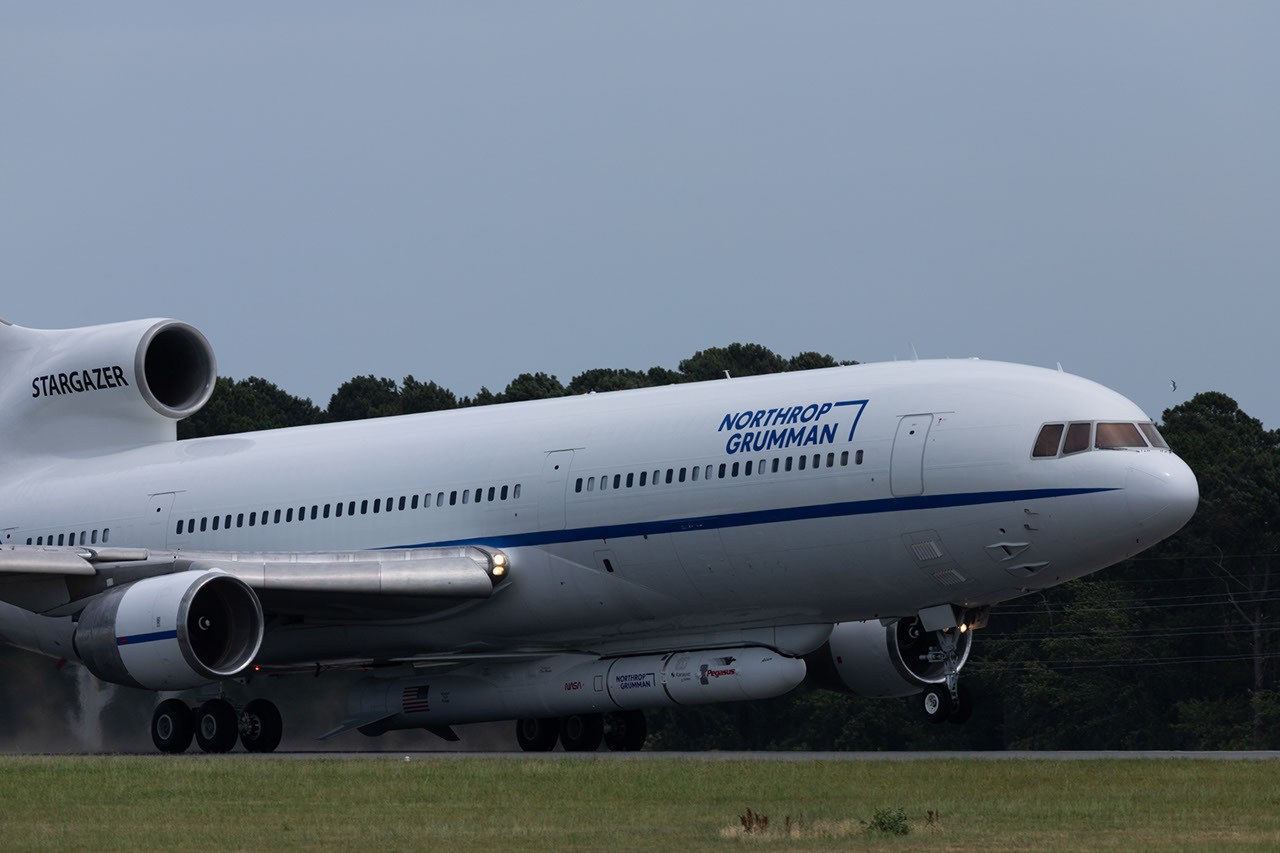
In a bid to salvage the Neil Gehrels Swift Observatory telescope from a fiery demise in Earth's atmosphere, NASA has embarked on a highly ambitious robotic rescue mission. Originally launched in 2004 for a brief two-year study of transient gamma-ray bursts, the telescope continues to yield critical astrophysical data due to its rapid-response capabilities. However, because it lacks independent propulsion, the device is gradually descending toward the atmosphere as solar cycles expand the air and produce drag. Recognizing the value of this unique instrument, NASA partnered with U.S. startup Katalyst to launch a custom recovery spacecraft named LINK. The rescue spacecraft lifted off on Tuesday at 1023 GMT aboard a Pegasus rocket, which was released mid-air from a jet plane rather than a traditional launchpad. Once the robot reaches an orbit adjacent to that of the telescope, it must identify Swift and execute a delicate docking maneuver. Using three mechanical arms, LINK will attempt to secure the telescope and tow it three hundred kilometers higher into a sustainable orbit. This intricate process, which is estimated to last several months, represents a series of unprecedented engineering challenges for both organizations. Although astrophysicist Regina Caputo conceded that the chance of success is arguably fifty-fifty, the team deems the thirty-million-dollar project a risk worth taking. Shawn Domagal-Goldman, director of the astrophysics division, expressed gratitude for the endeavor, highlighting the high density of technological firsts involved in this project. Were the mission to succeed, it would not only preserve a two-hundred-and-fifty-million-dollar scientific asset but also pioneer a new commercial paradigm for orbital satellite servicing. As Katalyst vice president Robert Lamontagne noted, this endeavor could establish a viable template to refuel, repair, and upgrade spacecraft in the future.
Take a position. Out loud, if you can.
Four ways to start. Pick one and try saying it before you scroll on.
Tip · Record yourself, use in a notebook, or practice with a language partner.
What is the original scientific purpose of the Swift telescope?
Inverted Conditionals
In formal English, we can omit 'if' and invert the subject and auxiliary verb (e.g., 'Were the mission to...') to form conditional sentences.
“Were the mission to succeed, it would not only preserve a two-hundred-and-fifty-million-dollar scientific asset but also pioneer a new commercial paradigm for orbital satellite servicing.”
What to know · C1
Try saying this aloud
Scenario: You are explaining a risky business turnaround plan to stakeholders.
- 01“Were the endeavor to succeed, it would pioneer a new paradigm.”
- 02“The project is a risk worth taking.”
- 03“This represents a series of unprecedented engineering challenges.”
Register tip · formal
🔑Key Phrases
A highly complex, formal opening structure utilizing a fronted prepositional phrase.
In an effort to shield the coastal ecosystem from catastrophic erosion, the government has invested in marine barriers.
Features a past participial clause functioning as an adverbial modifier.
Initially constructed in 1890 as a railway station, the building now serves as a modern art museum.
Uses concession, epistemic hedging ('arguably'), and a complex objective complement construct.
Although the CEO admitted that the software was imperfect, the board deemed the upgrade a step worth taking.
Employs subject-auxiliary inversion for a formal conditional alongside a correlative conjunction.
Were the treaty to fail, it would not only damage trade relations but also destabilize regional security.
Attributes a statement using a comparative clause and modal probability.
As the lead researcher explained, this breakthrough could provide a clean energy source for cities.
Article Audio — Kokoro TTS
NASA Embarks on Unprecedented Robotic Salvage Mission to Rescue Orbiting Swift Telescope
💬Discussion Questions
Open-ended questions to talk or write about — alone, with a partner, or in class.
- 1
How should international law address the liability of private corporations, like Katalyst, when orbital maintenance missions result in collisions?
Evaluate - 2
To what extent does the pursuit of cosmological understanding justify the carbon footprint associated with repeated rocket launches?
Opinion - 3
Critically analyze the environmental parallel between the 'tragedy of the commons' in Earth's oceans and the accumulation of space debris in low Earth orbit.
Compare - 4
What are the geopolitical ramifications of a single nation developing advanced capabilities to manipulate, repair, or hijack satellites in orbit?
Predict - 5
If you were in charge of allocating a nation's scientific budget, how would you balance astrophysical research against immediate ecological conservation?
Evaluate - 6
How might the development of a circular economy in space servicing redefine our broader approach to industrial waste and resource consumption on Earth?
Predict - 7
How do you personally reconcile the wonder of exploring the cosmos with the urgent need to address climate degradation on our home planet?
Personal - 8
Evaluate the role of commercial space startups in driving innovation compared to traditional state-funded space programs.
Compare
Adapted from Phys.org · Read the original. LectoPress rewrites the facts as original graded-reader text for language learners.
Get stories at your level, every day
C1 · EN · delivered to your inbox · unsubscribe any time
Customize language, level & topics → full preferences