NASA Launches Mission to Save Falling Telescope

NASA launched a robot on Tuesday to save the Swift telescope. Swift is falling and it will burn in the atmosphere soon. A startup company called Katalyst built the robot. The robot will hold the telescope and pull it higher. This mission is expensive, but it can help us repair and upgrade other satellites.
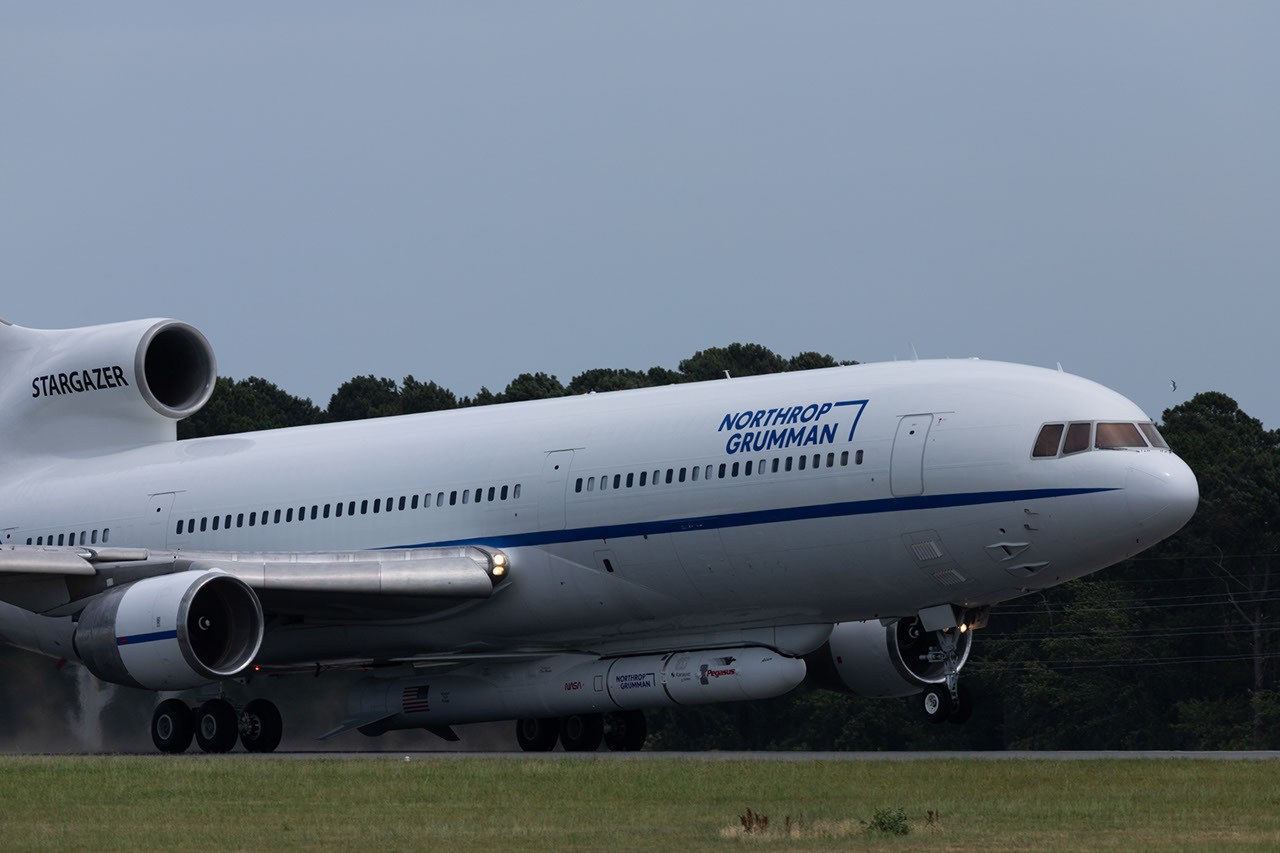
On Tuesday, NASA launched a robot to save the Swift telescope. Swift is an old telescope in low Earth orbit. It went into space in the year 2004. The telescope was only for a two-year mission. However, scientists still use it because it is very fast. It studies very big and fast explosions in space. Scientists call these violent space explosions gamma-ray bursts. Swift is at an altitude of 600 kilometers. The old telescope does not have its own motor. The sun is very active in its current cycle. This solar action makes the Earth's atmosphere expand. So, the expanding air drags the telescope downward. The telescope will burn in the atmosphere without help. A U.S. startup company, Katalyst, built the rescue robot. The creators call this new rescue robot LINK. The mission began on Tuesday at 1023 GMT. A jet plane carried a small Pegasus rocket. After that, the jet released the rocket in the air. The small rocket then flew quickly into space. The robot LINK will find the telescope in space. The robot will move very carefully near Swift. The robot will use its three movable arms. It will hold the telescope with these arms. After that, LINK will pull Swift 300 kilometers higher. This towing work will take at least one month. The whole mission will continue into the autumn. This rescue mission costs 30 million dollars. A new telescope is much more expensive to build. The original Swift telescope cost 250 million dollars. Regina Caputo predicts a 50-50 chance of success. But NASA wants to try this rescue mission. A successful mission will help other old satellites. Robots can repair and upgrade them in orbit.
Take a position. Out loud, if you can.
Four ways to start. Pick one and try saying it before you scroll on.
Tip · Record yourself, use in a notebook, or practice with a language partner.
In what year did Swift go into space?
Past Simple Tense
We use the past simple to talk about completed actions in the past. Regular verbs end in -ed, but irregular verbs have unique forms.
“A jet plane carried a small Pegasus rocket.”
What to know · A2
Try saying this aloud
Scenario: You are explaining why your old car needs repair and how much it will cost.
- 01“It does not have its own motor.”
- 02“This repair mission costs a lot.”
- 03“We can repair and upgrade it.”
Register tip · informal
🔑Key Phrases
Describes a completed past action using an infinitive of purpose.
He bought a book to study English.
Shows cause and effect using the connector 'so'.
So, the heavy rain stopped the game.
Expresses a future estimation using 'will' and a time expression.
The journey will take at least two hours.
Article Audio — Kokoro TTS
NASA Launches Mission to Save Falling Telescope
💬Discussion Questions
Open-ended questions to talk or write about — alone, with a partner, or in class.
- 1
What is your opinion on spending thirty million dollars to save an old satellite?
Opinion - 2
How does space trash compare to the trash we produce in our daily lives on Earth?
Compare - 3
What do you think will happen to satellite technology in the next ten years?
Predict - 4
If you had the chance, would you travel into space to look at the Earth?
Personal - 5
How do satellites help us monitor changes in the Earth's climate and environment?
Evaluate - 6
Do you think governments should focus more on cleaning the oceans or cleaning space orbit?
Compare - 7
In what ways do you think the sun affects our life and technology on Earth?
Opinion - 8
How would you describe the responsibilities of space agencies in keeping space safe?
Evaluate
Adapted from Phys.org · Read the original. LectoPress rewrites the facts as original graded-reader text for language learners.
Get stories at your level, every day
A2 · EN · delivered to your inbox · unsubscribe any time
Customize language, level & topics → full preferences